


Table of Contents
Hysterectomy in Miramar, Florida: Your Guide to Surgical Options and Recovery
Among the most common gynecologic surgeries is hysterectomy. If you are considering a hysterectomy in Miramar, FL, understanding your options is the first step. Hysterectomy, the surgical removal of the uterus, is often recommended for fibroids, endometriosis, cancer, or heavy bleeding.
According to the American College of Obstetricians and Gynecologists (ACOG), hysterectomy types include total (removing the uterus and cervix), subtotal (uterus only, cervix left in place), and radical (removing the uterus, cervix, and surrounding tissue). We specialize in minimally invasive techniques such as robotic hysterectomy in Miramar and laparoscopic hysterectomy in Miramar. These procedures use small incisions, which typically mean less pain and faster recovery.
According to NIH data, after a minimally invasive hysterectomy, most women spend 1-2 days in the hospital. Full recovery typically requires 4-6 weeks; during this time, you should avoid heavy lifting and sexual activity until your physician approves. Because every recovery is unique, our team provides personalized checkpoints.
At First Class OBGYN, Dr. Laviniu Anghel is a board-certified gynecologist (US and EU) dedicated to expert attentive care and advanced minimally invasive surgery. Our multilingual team serves Miramar, Weston, and Pembroke Pines. Schedule a consultation to discuss your needs.
We are committed to providing first class obgyn comprehensive care throughout your hysterectomy journey.
Individual outcomes depend on patient factors and clinical circumstances. Please consult your healthcare provider for personalized advice.
Understanding Hysterectomy: Types, Conditions Treated, and the Minimally Invasive Difference
At First Class OBGYN in Fort Lauderdale, we specialize in Hysterectomy Fort Lauderdale, offering advanced minimally invasive options. For patients who need a hysterectomy in Miramar, FL, our team provides expert attentive care tailored to each woman's unique needs. Our board-certified specialists offer personalized treatment in English, Romanian, and Spanish, ensuring clear communication every step of the way.
What Conditions Are Commonly Treated with a Hysterectomy?
Hysterectomy is typically recommended when other treatments haven't provided relief. According to the American College of Obstetricians and Gynecologists (ACOG), this surgery may be indicated for a variety of gynecological conditions. We commonly treat uterine fibroids--noncancerous growths that can cause heavy bleeding and pain--endometriosis, where tissue similar to the uterine lining grows outside the uterus, and adenomyosis, a related condition that leads to a thickened, painful uterine wall. Uterine prolapse, in which the uterus descends into the vaginal canal, and certain gynecologic cancers are also managed with hysterectomy. Every case is evaluated individually; we consider your symptoms, medical history, and future fertility goals before recommending any surgical approach.
Robotic vs. Laparoscopic vs. Abdominal Hysterectomy: Key Differences
When surgery is needed, the approach matters. Minimally invasive techniques--robotic and laparoscopic--are often preferred because they typically involve smaller incisions, less blood loss, and faster recovery. Here's how they compare to traditional abdominal hysterectomy:
- Incision size and scarring: Robotic and laparoscopic hysterectomies are performed through a few tiny incisions (often less than half an inch), while abdominal hysterectomy requires a larger horizontal or vertical incision.
- Hospital stay: Most minimally invasive patients go home the same day or after an overnight stay; abdominal hysterectomy may require two to three days in the hospital.
- Recovery time: With a robotic or laparoscopic hysterectomy, many women return to light activities within two weeks; abdominal hysterectomy recovery can extend to six weeks or more.
- Surgical precision: The robotic-assisted system provides enhanced 3D visualization and wristed instruments that allow very precise movements, which is especially valuable when working around delicate structures. Laparoscopic surgery also offers magnified views but relies on the surgeon's direct hand control.
At First Class OBGYN, patients who qualify for a robotic hysterectomy in Miramar benefit from this precision, while a laparoscopic hysterectomy in Miramar offers a trusted minimally invasive alternative. NIH research supports the shorter hospital stays and lower complication rates associated with these techniques. We tailor the choice to your condition, anatomy, and personal preferences.
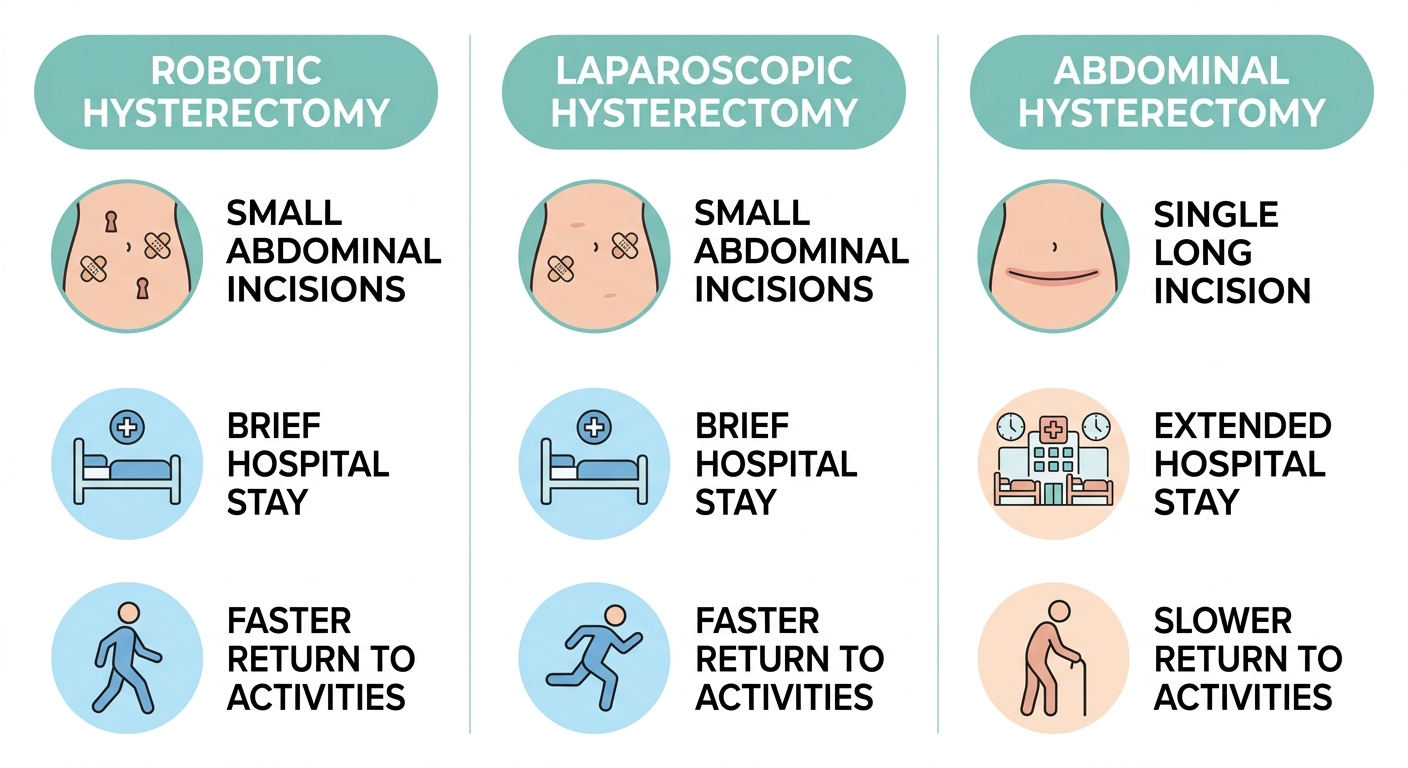
Hysterectomy approaches compared: incision size, stay, recovery
Now that you see how minimally invasive techniques reduce surgical impact, let's review which conditions qualify for these approaches.
Conditions That Quality Patients for a Robotic or Laparoscopic Approach
Not every patient is a candidate for minimally invasive surgery, but many are. Conditions such as complex uterine fibroids, large ovarian cysts, and severe endometriosis can often be removed using robotic or laparoscopic techniques. Early-stage gynecologic cancers may also be treated with a less invasive hysterectomy, provided the oncologic principles are respected. According to ACOG guidelines, the decision depends on the size and location of the pathology, and on patient factors like body mass index (BMI) and any history of previous abdominal surgeries. We thoroughly evaluate each case--using imaging and a thorough discussion of your health--to determine if you can benefit from a smaller incision and a quicker return to your daily life. Our goal is always to offer the safest, least disruptive route to relief while maintaining the highest standard of Expert Attentive Care.
Understanding which patients qualify helps us tailor the approach to each individual, leading us to discuss what to expect during recovery. Results may vary based on individual patient conditions and circumstances. Please consult a healthcare professional for personalised medical advice and diagnosis. Individual treatment outcomes depend on patient factors and clinical circumstances.
Key Benefits of Minimally Invasive Hysterectomy: Shorter Recovery and Less Pain
Now, let's explore the key advantages of choosing a minimally invasive approach. For many women, a hysterectomy Miramar FL can feel daunting, but knowing the benefits of modern techniques can bring real comfort. At First Class OBGYN, we combine Expert Attentive Care with a personalized treatment plan for every patient.
Reduced Recovery Time and Faster Return to Activities
Guidelines from the American College of Obstetricians and Gynecologists (ACOG) show that minimally invasive hysterectomy--whether robotic or laparoscopic--typically allows same-day discharge or a single night in the hospital, while abdominal surgery often requires a two- to three-day stay. Most women return to normal routines in two to four weeks, compared to six to eight weeks for open procedures. For patients in Pembroke Pines considering a Hysterectomy Pembroke Pines, this means a quicker return to family, work, and the activities they love. We also observe that a robotic hysterectomy Miramar can help women resume their lives with even greater ease and less post-operative discomfort.
Lower Risk of Complications and Preserved Pelvic Health
Smaller incisions--just 0.5 to 1 centimeter versus the 12 to 15 centimeters needed for open surgery--dramatically reduce infection risk and blood loss. ACOG data further indicates that minimally invasive techniques carry a lower risk of adhesions, hernias, and pelvic floor dysfunction because the surrounding tissues experience far less trauma. Protecting pelvic support is essential for long-term comfort and continence, and we design every treatment plan to respect your anatomy and health history. By minimizing disruption to the abdominal wall, the laparoscopic technique also helps preserve core strength and soften post-surgical pain, so you can feel confident in your recovery.
Proven Success in Treating Endometriosis and Uterine Fibroids
For women struggling with endometriosis or uterine fibroids, the evidence is clear. Research supported by the National Institutes of Health (NIH) confirms that both laparoscopic and robotic-assisted hysterectomy can effectively excise endometriosis lesions and remove fibroids with outcomes that are equal to or better than open surgery. Patient satisfaction remains consistently high, with many reporting lasting relief from chronic symptoms and an improved quality of life. A laparoscopic hysterectomy Miramar offers a precise, less invasive path to address these conditions, helping you reclaim your health without the extended recovery of traditional surgery.
Understanding these benefits, you may be ready to learn what to expect during the procedure itself. We are committed to helping women restore their confidence through advanced, compassionate care at our locations in Miramar, Weston, and Pembroke Pines. Results may vary; consult a healthcare professional for personal advice.
What to Expect: Pre-Op Preparations, the Procedure, and Your Recovery Timeline
If you are planning a hysterectomy in Miramar, FL, we know that learning about each stage can bring peace of mind. At First Class OBGYN, our team provides Expert Attentive Care, walking you through every step from your first consultation to full recovery. We are here for you, offering clear, friendly guidance and modern minimally invasive techniques designed to make your experience as comfortable as possible.
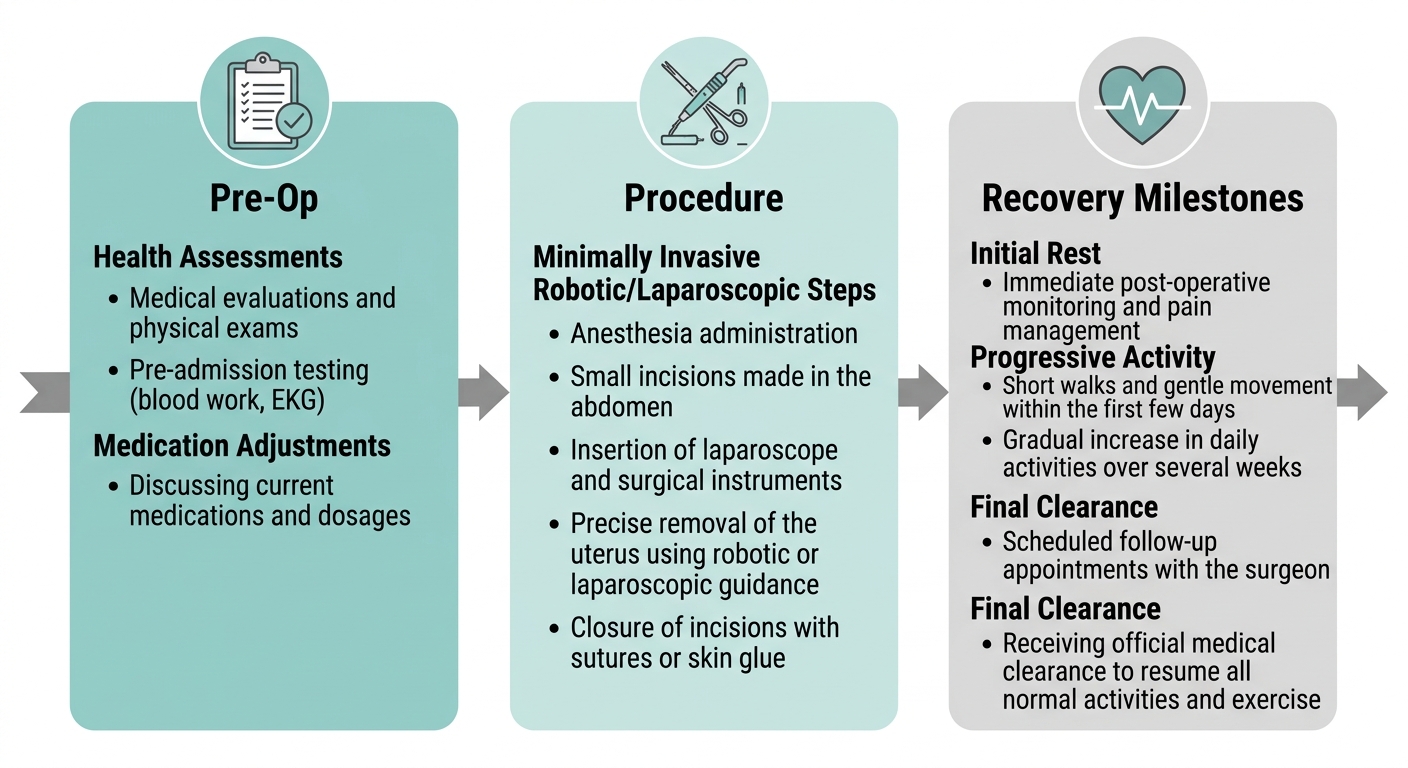
Visual timeline of the hysterectomy process from pre-op to recovery
Preparing for Surgery: Steps to Take Before Your Hysterectomy
If you are considering a hysterectomy Fort Lauderdale with us, your pre-operative journey begins with a thorough evaluation. According to the American College of Obstetricians and Gynecologists, routine pre-surgical assessments typically include blood work such as a complete blood count and chemistry panel, an electrocardiogram if indicated, and any necessary imaging studies. We work closely with you to adjust medications: blood thinners like warfarin, aspirin, and Xarelto are generally stopped 5 to 7 days before surgery, while instructions for diabetes or blood pressure medications are personalized. Lifestyle changes also play a role; we ask that you stop smoking at least two weeks beforehand, arrange for a reliable driver on surgery day, and have help at home for the first week. Our nurse navigator will review each step so you feel fully prepared.
The Robotic and Laparoscopic Procedure: A Step-by-Step Walkthrough
In the operating room, you receive general anesthesia for complete comfort. For those considering robotic hysterectomy in Miramar, the technique uses a single small 5-mm incision for the camera and a few tiny keyhole incisions for robotic arms. Alternatively, laparoscopic hysterectomy in Miramar employs 3 to 5 small incisions through which a camera and specially designed instruments are inserted. Under high-definition guidance, the surgeon seals and cuts the uterine blood supply, then removes the uterus through the vagina or a small abdominal incision--a process known as morcellation when needed. Research from the National Institutes of Health supports these minimally invasive approaches, showing they generally lead to less blood loss and a quicker return to daily activities. The full procedure usually takes 1 to 3 hours, and most patients go home the same day or after a single overnight stay.
Recovery Milestones: What to Expect Day by Day After Surgery
Your recovery after a hysterectomy follows a steady, predictable path. We design a personalized pain management plan, typically including prescription-strength NSAIDs and, if necessary, short-term opioid medication; ice packs applied to the abdominal area can also soothe discomfort, but avoid heating pads on incision sites. On Day 1, once you are discharged, the focus is rest and gentle movement. During Days 2 through 7, you should walk lightly around your home, but do not drive, lift anything heavier than 10 pounds, or return to strenuous exercise. By Week 2, you will see us for a follow-up visit where we check your incisions and review pathology results; many patients can begin desk-work at this stage. Over Weeks 3 to 6, you gradually increase activity, still observing the lifting limit, and around the 6-week mark, if healing is complete, we clear you for full activity--including exercise and sexual intercourse. Throughout this period, we are here to support you with any questions or concerns.
Results may vary based on individual patient conditions and circumstances.
Best Practices for Post-Operative Care and Choosing Your Hysterectomy Surgeon
Once you have chosen the right hysterectomy type, focus on a smooth recovery and selecting a surgeon who meets your needs. At First Class OBGYN, we guide you through every step, providing Expert Attentive Care and personalized support. When planning your hysterectomy in Miramar, FL, our team helps you prepare for a comfortable healing process and informed decision-making. If you are considering fertility preservation before surgery, review egg freezing guidelines Weston for age recommendations.
Managing Menopause Symptoms After Hysterectomy
When ovaries are removed during hysterectomy, estrogen levels drop sharply, often triggering hot flashes, vaginal dryness, mood changes, and sleep disturbances. For women undergoing hysterectomy in Miramar, FL, we tailor symptom relief using evidence-based approaches. Systemic hormone therapy (pills, patches, gels) can address widespread symptoms, while low-dose local estrogen (creams, rings) targets vaginal dryness with minimal whole-body exposure. The American College of Obstetricians and Gynecologists (ACOG) provides clear guidance on the benefits and risks of hormone therapy after bilateral oophorectomy, and we align our protocols with those recommendations.
Because early menopause also elevates the risk of bone loss, we prioritize calcium- and vitamin-D-rich nutrition and regular weight-bearing exercise. National Institutes of Health (NIH) data show that bone-density monitoring after surgical menopause helps protect long-term skeletal health. We are committed to helping women restore their confidence during this transition by combining medical management with lifestyle support.
Understanding the Costs and Insurance Coverage for Hysterectomy
Hysterectomy expenses vary widely depending on the surgical approach--robotic, laparoscopic, or open--and your specific insurance plan. Out-of-pocket costs can range from a few hundred to several thousand dollars, but we believe in transparent pricing and encourage every patient to request a detailed cost estimate from our practice. Our team also helps you verify coverage with your insurer before surgery so there are no surprises.
Financial planning may include payment plans or using a health savings account to manage deductible and coinsurance amounts. When you sit down with us, you'll experience a wonderful blending of friendly and professional guidance as we walk you through benefit summaries and estimate your responsibility. We are here for you, making the financial side of care straightforward and stress-free.
Key Criteria for Selecting a Minimally Invasive Hysterectomy Surgeon
Choosing the right surgeon is one of the most important decisions you'll make. At First Class OBGYN, our board-certified (US and EU) gynecologist offers expertise in both robotic hysterectomy in Miramar and laparoscopic hysterectomy in Miramar, allowing us to match the least invasive option to your condition. Look for these credentials when evaluating any surgeon:
- Board certification (US or EU) and fellowship training in minimally invasive gynecologic surgery
- A high volume of robotic and laparoscopic cases performed each year
- Strong patient satisfaction scores and reviews that highlight clear communication
- Multilingual care (English, Romanian, Spanish) to ensure you fully understand every step
- Convenient locations across South Florida, including Miramar, Weston, and Pembroke Pines
We take a personalized approach, listening to your goals and explaining how each technique affects recovery time and long-term wellness. With the right care team, you can look forward to improved quality of life.
As with any medical procedure, individual treatment outcomes depend on patient factors and clinical circumstances. Please consult a healthcare professional for personalised medical advice.
Taking the Next Step: Expert Hysterectomy Care in Miramar, Florida
If you are considering hysterectomy in Miramar, FL, taking the next step means choosing a surgical team you can trust. Your journey toward relief begins with a personalized consultation where we listen to your concerns and develop a tailored plan that fits your health goals, preferences, and recovery expectations.
At First Class OBGYN, Dr. Anghel brings extensive expertise in minimally invasive surgery. We offer laparoscopic hysterectomy in Miramar and robotic hysterectomy in Miramar, providing less invasive options that can reduce pain and speed recovery. Dr. Anghel, board-certified in the U.S. and European Union, offers multilingual care (English, Romanian, Spanish). Conveniently located in Miramar, we serve South Florida including Weston and Pembroke Pines. Per ACOG guidelines, minimally invasive approaches like laparoscopic and robotic hysterectomy are the standard of care when clinically appropriate. Research from the NIH shows that patients often experience shorter hospital stays, less postoperative pain, and quicker return to daily activities. We provide Expert Attentive Care from consultation through recovery, ensuring you feel supported.
Contact us today for first class obgyn women health and expert hysterectomy care in Miramar. We are here for you. Individual results may vary. Please consult with a healthcare professional to determine the best approach for your needs.


