


Table of Contents
Your Guide to Urinary Incontinence Treatment in Fort Lauderdale
Urinary incontinence--the involuntary leakage of urine--is common and treatable. Many women in South Florida search for effective urinary incontinence treatment in Fort Lauderdale. Our clinic provides Urinary Incontinence Fort Lauderdale solutions, from conservative care to advanced surgical options. The American College of Obstetricians and Gynecologists sets clinical guidelines for stress incontinence and overactive bladder, the two most prevalent types.
Our board-certified gynecologists (US & EU) specialize in urogynecological treatments and create personalized plans. Stress incontinence, which causes leakage during physical activity, often improves with pelvic floor therapy or laser treatments. Overactive bladder, characterized by sudden urgency, can be managed with medications or radiofrequency technology. For women searching for urinary incontinence treatment in Fort Lauderdale, the full spectrum of options includes:
- Lifestyle modifications and pelvic floor rehabilitation
- Medications to manage urgency and frequency
- Non-surgical laser and radiofrequency vaginal rejuvenation
- Minimally invasive surgical procedures (mid-urethral sling, colposuspension)
According to the National Institutes of Health, effective management is possible for most patients. Every plan is designed with the patient's comfort in mind--we are Committed to helping women restore their confidence. We deliver Expert Attentive Care at each visit.
With convenient offices in Miramar, Weston, and Pembroke Pines, we are easily reachable from the Fort Lauderdale area. We are here for you at every stage of your journey. Contact us today to schedule a consultation for a tailored treatment plan.
Understanding Urinary Incontinence: Types, Causes, and Diagnosis
To understand the treatment options for bladder control issues, it's helpful first to recognize the two main types of incontinence. When women begin exploring urinary incontinence treatment in Fort Lauderdale, knowing whether symptoms align with stress incontinence or overactive bladder guides the diagnostic process and ultimately shapes a personalized care plan.
What Is Stress Incontinence?
Stress incontinence is involuntary urine leakage triggered by physical pressure on the bladder. Coughing, sneezing, laughing, or exercising may cause small amounts of urine to escape. This condition typically develops when the pelvic floor muscles and supportive tissues weaken, often due to pregnancy, childbirth, or aging. It remains one of the most common forms of bladder control issues, particularly among women who have delivered children vaginally.
According to the American College of Obstetricians and Gynecologists, a cough stress test during a physical exam can help confirm the diagnosis by observing leakage during a cough. For many women in South Florida, these leaks happen during everyday activities, affecting confidence and quality of life. The key characteristic is that leakage occurs without any preceding urge--it's purely mechanical. Understanding this distinction is essential before moving forward with treatment.
What Is Overactive Bladder?
Overactive bladder, or urge incontinence, is marked by a sudden, intense need to urinate that may be difficult to control. The detrusor muscle surrounding the bladder contracts involuntarily, creating urgency even when the bladder is not full. Common triggers include consuming caffeine, alcohol, or acidic foods. Symptoms often include frequency (needing to urinate more than eight times a day) and nocturia (waking multiple times at night to void).
NIH data indicates that overactive bladder affects millions of women and can stem from nerve signaling disruptions, bladder muscle overactivity, or underlying neurological conditions. Unlike stress incontinence, the leakage here follows an overwhelming urge, not a physical movement. These two types may also coexist, a situation called mixed incontinence, which further highlights why a thorough diagnostic workup is so important.
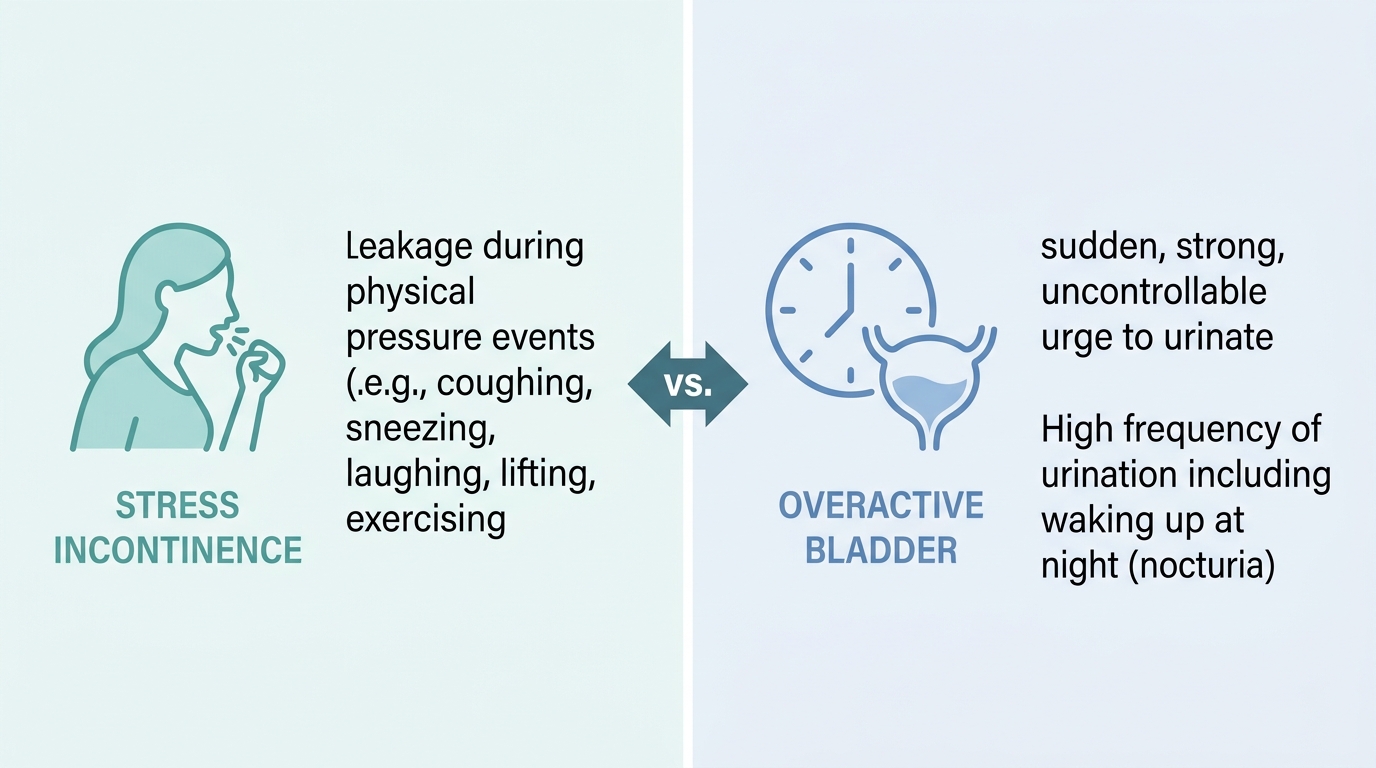
Comparison of stress incontinence and overactive bladder types
Diagnosis and When to Seek Care
For women considering urinary incontinence treatment in Fort Lauderdale, an accurate diagnosis is the foundation. Evaluation typically starts with a detailed patient history and a bladder diary to track fluid intake, voiding patterns, and leakage episodes. The physical exam often includes a cough stress test to observe urine loss directly, as well as post‑void residual measurement to check how well the bladder empties. When needed, urodynamic testing can provide deeper insight into bladder pressure and muscle function.
If symptoms interfere with daily life, fail to improve with lifestyle changes, or require specialized evaluation, we recommend consulting a specialist. You can schedule a consultation with a urogynecology Fort Lauderdale expert at our practice. Committed to helping women restore their confidence, our team provides Expert Attentive Care in Miramar, Weston, and Pembroke Pines. Please consult a healthcare professional for personalised medical advice and diagnosis.
Benefits of Modern Urinary Incontinence Treatment Options
Understanding the types of incontinence is the first step. Now, let's explore the benefits of the modern treatments available today. If you're seeking urinary incontinence treatment in Fort Lauderdale, our team at First Class OBGYN provides personalized, evidence-informed care that helps women across South Florida regain their comfort and confidence.
Non-Surgical Treatment Benefits
For many women, especially those with mild-to-moderate stress incontinence or an overactive bladder, non-surgical options deliver meaningful relief with zero downtime and very low side effects. Behavioral therapy, including timed voiding and bladder retraining, teaches you to gradually extend the intervals between bathroom trips. Pelvic floor exercises--often called Kegels--strengthen the muscles that support the bladder, and we frequently pair these with biofeedback to ensure you're targeting the right area. FDA-approved medications such as anticholinergics and mirabegron can calm bladder spasms or relax the detrusor muscle. We believe in Expert Attentive Care from the very first visit, so we craft a custom plan that respects your lifestyle. While success varies, national initiatives summarized by the National Institutes of Health affirm these first-line therapies as safe, effective starting points for many women.
Minimally Invasive Surgical Benefits
When conservative measures aren't enough, today's minimally invasive procedures offer a compelling path forward. Laser therapies like Er:YAG gently heat vaginal tissues to stimulate collagen and tighten the pelvic support--an approach that can address stress incontinence and provide vaginal rejuvenation co-benefits. Radiofrequency treatments (such as Viveve) similarly apply controlled energy to strengthen the pelvic floor without incisions. For more pronounced leakage, laparoscopic sling placement or colposuspension can restore support with success rates of 80-90 percent for the right candidates, typically requiring only one to two weeks of recovery. These advances mean less postoperative pain and a faster return to your routine--all while preserving natural anatomy. For a thorough evaluation of your symptoms, consider seeing a urogynecologist for bladder issues, who can determine the best minimally invasive option for you. In our Miramar, Weston, and Pembroke Pines offices, we combine precision with a gentle touch so you can restore your confidence.
Long-Term Quality of Life Improvements
Effective treatment extends well beyond physical symptom relief. Women who successfully manage incontinence often rediscover the freedom to exercise energetically--running, weight training, or even chasing after grandchildren without worry--while social outings and professional commitments no longer spark anxiety. Improved sexual intimacy is another deeply personal yet common benefit, as regaining control over bladder function helps rebuild self-esteem and comfort with closeness. When you choose comprehensive urinary incontinence treatment in Fort Lauderdale with our practice, you're not just addressing leaks; you're investing in emotional well-being, reduced embarrassment, and a fuller daily life. From the moment you step into our clinic, we are committed to helping women restore their confidence and experience a wonderful blending of friendly and professional care. With so many effective options, the key is finding the right treatment for you--which we cover in the next section.
How Urinary Incontinence Treatment Works: From Diagnosis to Recovery
Now that you understand what urinary incontinence involves, let us walk you through how we treat it at First Class OBGYN. If you are looking for urinary incontinence Fort Lauderdale treatment options, our clinic provides comprehensive care from diagnosis to recovery.
Initial Consultation and Evaluation
Your journey begins with a private, comfortable consultation at our Fort Lauderdale‑area office. We take a detailed medical history and review your bladder diary, followed by a gentle physical exam that may include a pelvic evaluation. If needed, we perform urodynamic testing to measure bladder function. This thorough assessment, designed in line with the American College of Obstetricians and Gynecologists (ACOG) guidelines, allows us to pinpoint the type and severity of your incontinence so we can create a tailored plan that respects your goals and concerns. You will meet with our caring team in a warm, private environment where you can discuss your symptoms openly. We take time to answer all your questions, ensuring you feel comfortable and empowered.
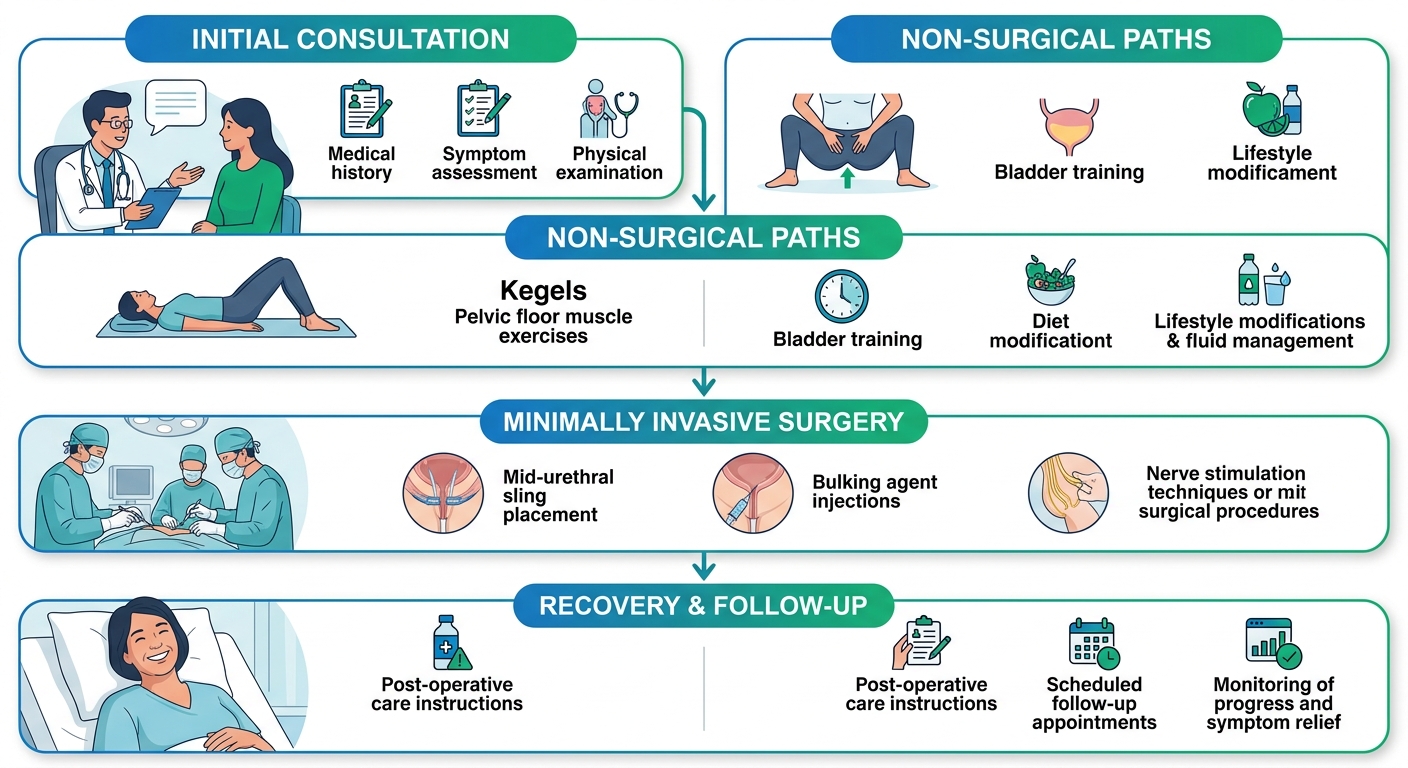
Comprehensive urinary incontinence treatment pathway visualization
Non-Surgical Treatment Pathways
We always begin with the least invasive options. As part of your personalized urinary incontinence treatment in Fort Lauderdale, we design a holistic plan that often starts with pelvic floor physical therapy. Through biofeedback, you can see real‑time measurements of your muscle activity, which helps you contract and strengthen the right muscles. Behavioral modifications--such as scheduled voiding, managing fluid intake, and cutting back on bladder irritants like caffeine--are equally important. For women with overactive bladder, medications like anticholinergics calm the bladder, while beta‑3 agonists increase its capacity. If physical therapy alone isn't enough, devices such as pessaries or urethral inserts provide additional non‑surgical support. Research from the National Institutes of Health (NIH) confirms that these conservative therapies are highly effective first‑line treatments, often eliminating the need for surgery. All of our non‑surgical approaches carry zero downtime and easily fit into your daily routine. Led by compassionate providers, we are here for you and deliver Expert Attentive Care from your very first visit.
Minimally Invasive Surgical Options
When non‑surgical treatments do not fully resolve symptoms, we offer advanced minimally invasive procedures that target the underlying cause of your incontinence. Laser therapy (CO₂ or erbium‑based) gently resurfaces the vaginal wall, stimulating collagen production to tighten tissues and significantly reduce stress incontinence leakage. Radiofrequency treatments like Viveve or ThermiVa use controlled thermal energy to remodel and support the vaginal canal. For more severe stress incontinence or persistent overactive bladder, laparoscopic sling procedures provide durable support, while sacral neuromodulation delivers mild electrical pulses to regulate bladder nerve signals. Because these surgeries are performed through tiny incisions, they result in less pain, minimal scarring, and a much shorter recovery than traditional open surgery. Each outpatient procedure allows you to return home the same day, and many patients report noticeable improvement within a few weeks.
Recovery and Follow-Up Care
Our non‑surgical treatments involve zero downtime, so you can resume daily activities immediately. After a minimally invasive procedure, most women return to their normal routine within 1‑3 days. We see you for follow‑up visits at two weeks and three months to evaluate your progress and ensure lasting results. Your recovery is personalized, and our team is committed to helping women restore their confidence. Please note that results may vary based on individual patient conditions and circumstances.
Best Practices for Managing Urinary Incontinence: Lifestyle and Therapy
After understanding your type of incontinence, you can try several evidence-based strategies. Many women in South Florida exploring urinary incontinence treatment in Fort Lauderdale find that non-invasive approaches reduce symptoms. Below we cover lifestyle changes, pelvic floor exercises, and when to see a specialist.
Lifestyle Modifications for Bladder Health
Making thoughtful changes to daily habits can improve bladder control. The American College of Obstetricians and Gynecologists (ACOG) recommends managing fluid intake and avoiding bladder irritants as first steps.
- Fluid management: Space liquids evenly throughout the day rather than drinking large amounts at once. Avoid beverages that irritate the bladder, such as coffee, tea, and citrus drinks.
- Dietary adjustments: Spicy foods, artificial sweeteners, and alcohol can also worsen symptoms for some women.
- Weight management: Excess body weight puts pressure on the bladder and pelvic floor; losing even a modest amount of weight can help reduce stress incontinence.
- Bladder training: Gradually increase the time between bathroom visits by 10‑15 minutes each week, aiming for a comfortable 3‑4 hour interval. Scheduled voiding--going at set times rather than waiting for urgency--retrains the bladder.
These modifications are particularly useful for overactive bladder symptoms. While helpful, results may vary based on individual patient conditions.
Pelvic Floor Exercises and Physical Therapy
Strengthening the pelvic floor muscles is a cornerstone of non-surgical treatment. Kegel exercises are simple and can be done anywhere. To perform them correctly:
- Identify the right muscles by stopping your urine flow midstream; those are the pelvic floor muscles.
- Squeeze and hold for 5‑10 seconds, then relax for 10 seconds. Repeat 10 times, at least three times daily.
Biofeedback therapy can help if you're unsure whether you're engaging the correct muscles. During a biofeedback session, sensors provide real-time feedback to ensure effective contractions.
At First Class OBGYN, we work closely with dedicated pelvic floor therapists who can guide you through specialized exercises. We can help you identify which pelvic floor conditions treated by our specialists align with your symptoms. These exercises are especially beneficial for stress incontinence and can also improve overactive bladder symptoms. While individual outcomes vary.
When to Consult a Specialist
It's important to know when professional help is needed. Persistent leakage can affect your quality of life, but you don't have to manage it alone. You should consult a specialist if:
- Incontinence persists despite trying lifestyle changes and pelvic floor exercises for about 8‑12 weeks.
- Symptoms interfere with your daily activities, social life, or emotional well-being.
- You experience sudden, severe leakage or notice blood in your urine.
If conservative treatments haven't provided sufficient relief in that time frame, our urogynecologists can perform an in-depth evaluation, which may include urodynamic testing to pinpoint bladder function issues. At First Class OBGYN, we are here for you with Expert Attentive Care, tailoring a personalized treatment plan to your specific needs. From advanced medications to minimally invasive procedures, we can help you find lasting relief. If you've tried conservative approaches without success, our team is ready to discuss the next steps.
Take the Next Step Toward Bladder Health
Now that you understand your treatment options, it is time to take the next step toward lasting bladder health. If you are seeking urinary incontinence treatment in Fort Lauderdale, you have come to the right place.
We provide effective, ACOG-recommended approaches for stress incontinence and overactive bladder that address leakage and urgency without making guarantees. For those experiencing a Urinary Tract Infection Fort Lauderdale, we offer prompt diagnosis and expert care to help you feel better quickly.
Dr. Laviniu Anghel is dual board-certified in the US and EU, a distinction that reflects our commitment to the highest standards of urogynecological care. Our team speaks English, Romanian, and Spanish, so you can communicate comfortably in the language you prefer. From advanced diagnostics to minimally invasive procedures, we tailor every plan to your needs.
Don't let bladder concerns hold you back any longer. Contact our Miramar office or any South Florida location to schedule your confidential consultation. We provide Expert Attentive Care, and we are committed to helping women restore their confidence. We welcome your questions and appointment requests. We are here for you.


