


Table of Contents
Microneedling for Hair Loss: What You Need to Know
Microneedling for hair loss is a gentle, minimally invasive treatment that uses fine needles to create tiny micro-injuries in the scalp. These controlled punctures trigger your body’s natural wound-healing response, stimulating collagen production and reactivating dormant hair follicles. Whether you use a derma roller for hair growth at home or visit us for a professional microneedling pen session, the goal is to improve scalp health and encourage thicker, fuller hair.
Research funded by the National Institutes of Health confirms that scalp microneedling is safe and effective for androgenetic alopecia. Studies also highlight that combining microneedling with PRP for hair loss may enhance outcomes—the tiny channels allow growth factors from platelet-rich plasma to reach deeper layers of the skin where they can work more efficiently. At our practice, we view this as a complementary wellness treatment that fits alongside your personalized care plan.
Most people need 3–6 sessions spaced 4–6 weeks apart to see visible improvement. You may notice temporary scalp redness, mild swelling, or pinpoint bleeding right after treatment, but these typically resolve within 24–48 hours. Individual results will vary, and consistency is key. Next, we’ll walk you through exactly what happens during a microneedling procedure so you know what to expect.
How Microneedling Stimulates Hair Growth
Many people are curious about non-surgical options to address thinning hair, and we understand why microneedling for hair loss has become a frequent topic of discussion among our patients. This innovative technique uses the body's own healing mechanisms to potentially revitalize dormant follicles in the scalp, offering a path to fuller looking hair without incisions or extensive downtime. By exploring the biology behind this procedure, we can better appreciate how controlled stimulation may lead to noticeable improvements over time.
The Wound Healing Response
The process begins when a specialized device with fine, sterile needles creates thousands of microscopic punctures across the treatment area in the scalp. These controlled micro-injuries are not damaging; rather, they trigger a sophisticated repair cascade that has evolved to protect and regenerate tissue. The body immediately interprets these tiny channels as signals to begin healing, dispatching platelets and specialized cells to the site. This natural response forms the foundation of how microneedling encourages follicles that have slowed or stopped producing strong strands to re-enter an active growth phase.
Here is a simplified look at the healing steps that follow the micro-injuries:
- The body releases specialized proteins called growth factors, including platelet-derived growth factor and vascular endothelial growth factor, which signal cells to repair and rebuild tissue.
- New capillaries begin to form around the follicles, a process known as angiogenesis, which dramatically improves the delivery of oxygen and key nutrients to the follicle base.
- Collagen production increases in the treated area, strengthening the surrounding dermal structure and creating a healthier environment for follicle anchoring.
- Stem cells within the follicle bulge region become activated, promoting the transition from a resting state into the anagen, or active growth, phase.
This orchestrated response effectively wakes up underperforming follicles. Many patients seeking microneedling treatment for hair loss appreciate that this approach works with their own biology, not against it, setting the stage for gradual and natural-looking improvements.
Enhanced Circulation and Growth Factor Activation
A key benefit of microneedling for hair growth lies in the sustained increase in local blood flow to the scalp that follows treatment. With enhanced microcirculation, follicles that were previously starved of essential resources now receive a steady supply of oxygen, amino acids, and vitamins. This nourishing environment supports the metabolic demands of robust hair production and helps remove waste products that can accumulate in stagnant tissue. The release of growth factors like vascular endothelial growth factor specifically directs the construction of new blood vessels, a critical step that underlies the visible thickening many patients notice after completing their recommended sessions.
Complementing Topical Therapies
Another fascinating aspect of this treatment is its ability to boost the effectiveness of topical solutions. The micro-channels created during a session temporarily increase the permeability of the scalp skin, which means that medicines like minoxidil applied shortly afterward can be absorbed more deeply and in greater concentration. Whether used with a derma roller for hair growth at home under guidance or with medical-grade devices in our office, this synergy can maximize the therapeutic value of each application. Similarly, combining microneedling with PRP for hair loss leverages the concentrated growth factors from platelet-rich plasma, further enriching the follicular environment and potentially accelerating the regrowth timeline.
It is important to keep expectations grounded and remember that biology moves at its own pace. While this approach stimulates activity in dormant follicles, it is not a guaranteed cure, and individual results always vary depending on genetics, the underlying cause of hair thinning, and overall health. We typically discuss a series of three to six sessions spaced several weeks apart, as consistent, repeat stimulation is required to shift follicles from a long resting phase into a productive growth cycle. Our role at First Class OBGYN is to guide you through what to expect, monitor your progress, and ensure you feel supported at each step along the way. We are here for you as you explore this gentle and scientifically grounded option for rejuvenating your scalp and hair.
Clinical Evidence and Expected Results
Building on our introduction to microneedling, this section focuses on the scientific evidence and clinical research that support its use. We’ll explore how microneedling for hair loss works at a cellular level and what published data tell us about its effectiveness. Understanding the biological mechanisms and reviewing the evidence helps set realistic expectations for anyone considering this treatment.
Mechanism of Action
The effectiveness of microneedling hinges on its ability to harness the body’s own healing capabilities. When we perform scalp microneedling, the tiny needles create thousands of microscopic channels or micro-injuries in the scalp. This controlled trauma triggers a well-defined wound healing cascade. The body immediately responds by releasing a variety of growth factors, including vascular endothelial growth factor (VEGF) and platelet-derived growth factor (PDGF). These signaling proteins are crucial for tissue regeneration and play a vital role in hair follicle cycling. VEGF, for instance, stimulates the formation of new blood vessels around the follicle, improving nutrient and oxygen delivery to the hair bulb. Simultaneously, the process activates stem cells in the bulge area of the hair follicle and stimulates the overexpression of hair-growth-related genes. This cascade of biological events can reawaken dormant follicles in individuals with androgenetic alopecia, shifting them from a resting phase into an active growth phase. We see this as a powerful demonstration of the body’s innate regenerative potential being directed toward hair restoration.
Review of Clinical Studies
The scientific community has produced a growing body of evidence on microneedling therapy for hair regrowth. According to NIH-supported studies, the procedure has shown promise as both a standalone therapy and, more notably, as a combination treatment. Research indexed by the National Institutes of Health suggests that while standard microneedling alone is effective, combining it with other treatments often yields superior results. A particularly compelling area of research involves microneedling with PRP for hair loss, where platelet-rich plasma is topically applied after creating the microchannels, allowing the concentrated growth factors to penetrate deeply. Another well-researched combination is applying topical minoxidil immediately following a microneedling session. The absorption is significantly enhanced through the tiny channels, boosting the drug's efficacy. To synthesize the evidence, the following table compares the three primary treatment approaches.
The comparison below illustrates the key differences in growth factor activation, procedure duration, and evidence level across these common approaches.
| Feature | Standard Microneedling | Microneedling + PRP | Microneedling + Minoxidil |
|---|---|---|---|
| Growth Factor Activation | Moderate—primarily from wound healing cascade | High—combines wound healing with concentrated platelets | Moderate—wound healing plus drug-induced stimulation |
| Procedure Duration | 30 minutes | 45–60 minutes (includes blood draw) | 30 minutes |
| Evidence Level | Moderate | Strong (multiple RCTs) | Moderate |
A review of these findings confirms that adding PRP to a microneedling protocol elevates the evidence level and biological response. While standard microneedling effectively stimulates natural healing, the combination with PRP adds a potent, patient-derived concentration of growth factors, resulting in a well-documented increase in hair count and density. The combination with minoxidil represents another effective strategy, using the enhanced absorption to maximize the drug’s clinical impact.
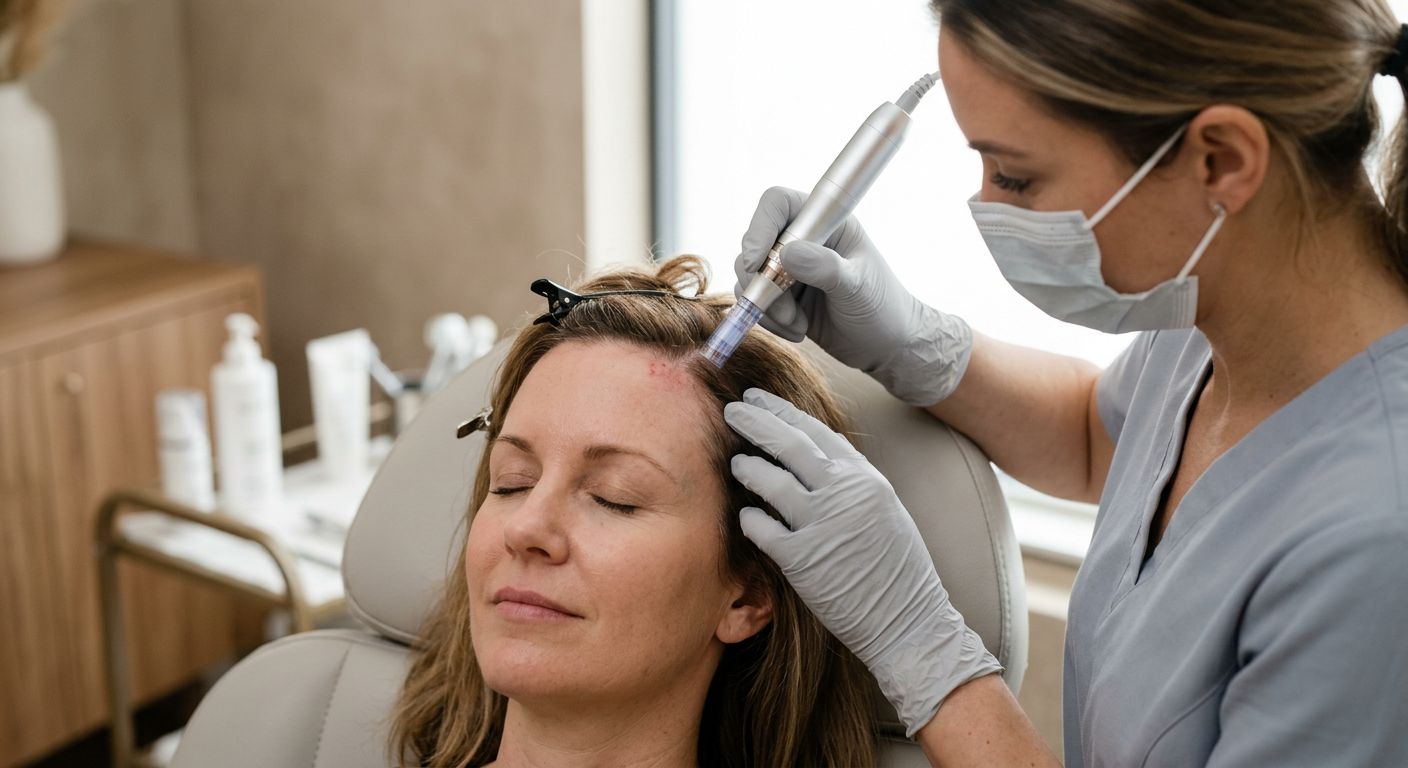
Expert microneedling therapy for hair loss in a calm, clinical setting.
Comparison of microneedling treatment approaches: standard, with PRP, and with minoxidil.
This visual summary reinforces the data we discussed, making it clear why we often recommend a combined approach for our patients seeking to address hair thinning. The synergy between the physical stimulation of microneedling and the biochemical boost from PRP or minoxidil can create a more robust response.
Factors Influencing Outcomes
Achieving the best possible results from microneedling depends on several critical variables. Needle depth is a primary factor and must be tailored to the patient; scalp treatments for hair restoration typically use depths between 0.5 and 1.5mm. Going too shallow may not trigger a potent enough wound healing response, while excessive depth can cause unnecessary discomfort or tissue damage. Another key variable is the treatment frequency, with most effective protocols involving sessions spaced about every four weeks, or one to two times a month. This interval allows the skin to fully heal and the new growth cycle to initiate before the next stimulation. Patient selection also profoundly influences outcomes. Individuals in the earlier stages of hair loss, whose follicles are dormant rather than completely destroyed, tend to respond more favorably. We also consider that tools like a derma roller for hair growth can have variable results based on home-use consistency and needle quality, which is why professional treatment often provides more predictable stimulation. Interestingly, microneedling techniques are also being applied in other areas of women's health, such as vaginal rejuvenation overview.
Now that we’ve reviewed the scientific basis and the evidence supporting these protocols, it's important to understand what the actual treatment experience involves. Results may vary based on individual patient conditions and circumstances. Please consult a healthcare professional for personalised medical advice and diagnosis.
What to Expect During a Microneedling Session
If you’re exploring advanced options for thinning hair, you may have heard about microneedling for hair loss and wondered what the process actually feels like. At First Class OBGYN, we believe that understanding every step of your treatment helps you feel calm, prepared, and confident. We are here for you from the moment you arrive, committed to helping women restore their confidence through attentive, personalized care. This section walks you through exactly what happens before, during, and after a professional microneedling session for hair loss so you can set realistic expectations.
Pre-Treatment Preparation
Your experience with microneedling for hair loss begins well before the device touches your scalp. When you arrive at our Miramar office, we review your full medical history to ensure the treatment is a safe and suitable option for you. This includes discussing any medications you take, current health conditions, and your personal hair restoration goals. We then gently cleanse your scalp to remove any natural oils, styling products, or debris that could interfere with the treatment. A topical numbing cream is applied next and left to absorb for approximately 30 to 45 minutes, ensuring your comfort throughout the session. Many patients describe this waiting period as relaxing, using the time to listen to music or simply rest. We check in with you before proceeding to confirm you feel sufficiently numb and answer any last-minute questions.
The In-Office Procedure
Once your scalp is prepared, our provider brings you into a comfortable treatment room where the specialized microneedling device is set up and calibrated to an appropriate depth. The handpiece contains a cluster of fine, sterile needles that create micro-injuries in targeted areas of the scalp. As our clinician guides the device in a systematic pattern across the thinning regions, you may feel a light vibration or a mild scratching sensation, but the numbing cream significantly reduces any discomfort. Sessions typically last between 20 and 40 minutes depending on the size of the treatment area. Immediately afterward, we apply a soothing serum or growth factor solution to calm the skin and support the early stages of healing. Following our clinical protocols, we gently cleanse the area once more and review detailed aftercare instructions before you leave.
We know some patients are curious about how this compares to using a derma roller for hair growth at home. To help you make an informed decision, we’ve prepared a direct comparison.
The following table contrasts clinic-based microneedling with consumer-grade derma rolling for hair loss, drawing on our own clinical protocols and patient-reported outcomes.
| Aspect | Professional Microneedling | At-Home Derma Roller |
|---|---|---|
| Needle Depth | Adjustable, up to 2.5 mm | Fixed, typically 0.25–1.5 mm |
| Safety | High (sterile, controlled environment) | Moderate (risk of infection if not sanitized) |
| Efficacy | Higher due to deeper penetration and precision | Lower, but some evidence of benefit with consistent use |
| Cost per Session | $200–$400 | $20–$50 (one-time device) |
Professional treatments allow for deeper, more precise penetration in a sterile setting, which is why many patients find them more effective than repeated use of a derma roller for hair growth. Some individuals later explore enhanced protocols such as microneedling with PRP for hair loss, which combines platelet-rich plasma to further stimulate follicles.
Recovery and Follow-Up
After your session, most patients experience only minimal downtime. It is normal to notice mild redness and slight swelling across the treated areas, similar to a light sunburn, but this typically fades within 24 to 48 hours. We recommend avoiding harsh hair products, direct sun exposure, and vigorous exercise on the day of treatment to support proper healing. Our team schedules ongoing follow-ups and generally advises a series of sessions spaced every 4 to 6 weeks to achieve optimal hair regrowth, adjusting the plan based on your individual response. As the recovery phase sets the stage for visible improvements, staying consistent with your appointments helps you get the most out of the treatment.
For those interested in additional aesthetic services, we also offer options such as vaginal rejuvenation near me to address a range of feminine wellness concerns. Results may vary based on individual patient conditions and circumstances. Please consult a healthcare professional for personalised medical advice and diagnosis.
Combining Microneedling with PRP and Other Therapies
While microneedling for hair loss can be effective on its own, combining it with platelet-rich plasma (PRP) and other supportive therapies often yields more robust results. At our practice, we believe that a multi-modal approach addresses hair thinning from several angles simultaneously, supporting healthier, fuller-looking hair over time.
PRP is a concentrate of platelets derived from a small sample of your own blood. These platelets are packed with growth factors that signal hair follicles to stay in the active growth phase longer. When microneedling with PRP for hair loss is performed, the tiny micro-channels created by the device allow those growth factors to penetrate deeper into the scalp, reaching the follicles where they are needed most. This PRP-enhanced microneedling strategy may improve the scalp environment and encourage stronger regrowth compared to applying PRP topically without micro-channels.
Beyond PRP, other complementary therapies can be layered into a comprehensive hair restoration plan. Topical minoxidil remains a widely recognized option for stimulating follicles, while low-level laser therapy uses specific wavelengths of light to energize cellular activity in the scalp. Nutritional support, including targeted supplements, helps address any internal deficiencies that could be contributing to shedding. It is important to note that at-home devices like a derma roller for hair growth differ significantly from professional microneedling. A derma roller creates shallower punctures with less precision and cannot deliver the same depth or consistency as clinical treatments performed by a qualified provider. We emphasize Expert Attentive Care when evaluating which combination is right for you, ensuring your plan is tailored to your unique pattern of hair loss and overall health.
A typical combination microneedling therapy plan involves three to six sessions spaced about four to six weeks apart, though individual needs vary. Because hair growth cycles are slow, noticeable improvements often take several months. Maintenance sessions once or twice a year may be recommended to preserve your results. We always begin with a thorough consultation to review your medical history, examine your scalp, and set realistic expectations. Results may vary based on individual patient conditions and circumstances, and no treatment can promise a specific outcome for every person.
We are here for you as you explore your options. If you are wondering whether combination microneedling therapy is a good fit for your goals, we encourage you to schedule a conversation with a healthcare professional who can provide personalized guidance. Please consult a healthcare professional for personalised medical advice and diagnosis.
Frequently Asked Questions About Microneedling for Hair Loss
We've covered how microneedling works for hair loss; here are answers to your most common questions.
What is microneedling for hair loss and how does it work? With microneedling for hair loss, tiny, controlled micro-injuries are created on the scalp to stimulate collagen production and increase blood flow to hair follicles. We believe this natural healing response can help reactivate dormant follicles and support healthier, thicker hair growth over time.
How many sessions are needed and when will I see results? Most patients benefit from a series of treatments spaced about four weeks apart, though the exact number depends on your individual needs. Visible improvements typically appear within three to six months as the hair growth cycle responds to the therapy. We will design a personalized plan during your consultation.
Is microneedling with PRP for hair loss more effective? Combining microneedling with PRP for hair loss can enhance results because platelet-rich plasma delivers concentrated growth factors directly into the treated areas. While standard microneedling alone offers benefits, adding PRP may accelerate and improve outcomes for suitable candidates.
Who is a good candidate for this treatment? Individuals with androgenetic alopecia, including women experiencing post-partum or hormonal hair thinning, often respond well to scalp microneedling. During your evaluation we assess your medical history and hair loss pattern to confirm whether this approach is right for you. Some patients also use a derma roller for hair growth as a complementary at-home tool, but we advise discussing this with our team first.
Does it hurt, and what is the downtime? Most people describe the sensation as mild and tolerable, and we take steps to keep you comfortable throughout the session. Afterwards you may notice some redness or slight sensitivity, but these effects usually resolve within a day or two. We are here for you with guidance to make your recovery smooth and stress-free.
Can I combine microneedling with other treatments? Yes, this therapy often pairs well with topical minoxidil or other physician-directed options to support hair regrowth. Because every case is unique, we recommend scheduling a consultation so we can discuss a comprehensive strategy. Our practice also offers additional confidence-restoring procedures—you can explore our vaginal rejuvenation cost guide for information on another service available at First Class OBGYN.
Results vary, and no two patients respond exactly alike. Our team provides Expert Attentive Care at every step, and we invite you to schedule a visit at our South Florida offices to learn what microneedling can do for you.
Moving Forward with Hair Loss Solutions
Microneedling for hair loss is a promising non-surgical option. Using a derma roller for hair growth at home may complement professional treatments, but in-office techniques deliver more consistent results.
Combining microneedling with PRP for hair loss may amplify benefits for some women. Medical guidance is essential to evaluate your candidacy and ensure safe, effective treatment.
We are dedicated to personalized, patient-centered care and are committed to helping women restore their confidence. Contact our Miramar office to book a consultation — we are here for you every step of the way.


