


Table of Contents
The Exercise-Fertility Connection
Many women wonder whether excessive exercise can affect fertility, and the answer is yes: pushing too hard for too long can disrupt the body’s natural hormonal balance, which may interfere with ovulation and the menstrual cycle. Exercise supports overall health, but very intense or excessive training can sometimes create challenges for reproductive function.
Some people ask us if they might actually have a harder time getting pregnant because of the types of workouts that they regularly do for fitness. There’s a right kind of exercise and amount of exercise but there’s also such a thing as too much and too intense. We’ll explain how excessive training can negatively impact your fertility, and help you make smart choices as you build your family.
How High-Intensity Exercise Disrupts Ovulation and the Menstrual Cycle
We often hear from active women in South Florida who ask, can excessive exercise affect fertility? The answer lies in how the body prioritizes energy when training intensity outpaces recovery and nutrition. When we push our bodies hard, the reproductive system becomes one of the first to take a backseat, because maintaining ovulation requires more energy than the body can spare under high stress.
The brain and ovaries communicate through a delicate chain called the hypothalamic-pituitary-ovarian axis. Intense training can disrupt this signaling when the body interprets the physical strain as a threat to survival. The hypothalamus, a control center in the brain, may slow the release of hormones that trigger ovulation. Without these signals, the ovaries may delay or skip ovulation altogether, which can stretch out the cycle, make bleeding lighter or heavier, or even pause periods entirely. These changes serve as the body’s way of conserving energy for more immediate needs.
Not everyone reacts the same way, of course. Factors like the type of exercise, how long and hard we train, what we eat, and our unique physiology all influence whether our cycles are affected. Some women notice changes quickly, while others maintain regular cycles even with heavy training. What matters most is listening to the body’s signals before cycles fully stop.
In other words, when the training load drops off, or nutrition improves, the body usually sorts itself out and gets back into a regular pattern with ovulation. We reassure all women in training about this ovulatory disorder being just a transient disturbance to their bodies due to the training demands on them, but not a permanent condition.
Warning Signs Your Workout Routine May Be Affecting Your Fertility
If you are working out like a beast and trying to get pregnant, sometimes your body will give you signals worth listening to. Recognizing these signs early can help you adjust your routine before they become more serious. The problem lies in when your exercise may disrupt ovulation, which often changes your cycle in ways you can notice.
Menstrual-cycle changes
Your period is one of the clearest ways your body communicates with you. If you notice missed or irregular periods, or if your cycles become noticeably shorter or lighter, it’s worth paying attention. Some women also stop seeing typical ovulation signs, like changes in cervical mucus or positive results on an ovulation predictor kit. These shifts suggest your intense training may be suppressing ovulation, which can make conception harder.
Physical and energy signals
Beyond your cycle, your body may reveal other signs that your exercise regimen has become too demanding for you. For example, persistent fatigue which cannot be resolved by resting; sudden decline in fitness level or strength; more frequent injury or slower healing time; inability to fall asleep or waking up frequently through the night; feeling abnormally cold compared to normal conditions; losing more weight unexpectedly. These signs could manifest gradually, so it might take at least a few weeks to notice changes instead of only looking at one hard workout session.
Emotional and mental cues
The emotions you experience during training could indicate something is wrong. Irritation, being depressed about working out, feeling nervous during exercise, or being forced into workout sessions as opposed to enjoying them, all could be warning signs that your routine needs modification.
These can be warning indicators for you if they show up at the same time. The happy part about this list is that in many cases, these signals are reversible once you adjust your exercise intensity, nutrition, and recovery. That said, now we come into our second question: how much vigorous exercise is actually appropriate when trying to conceive.
We are here for you if you’d like guidance tailored to your body and goals.
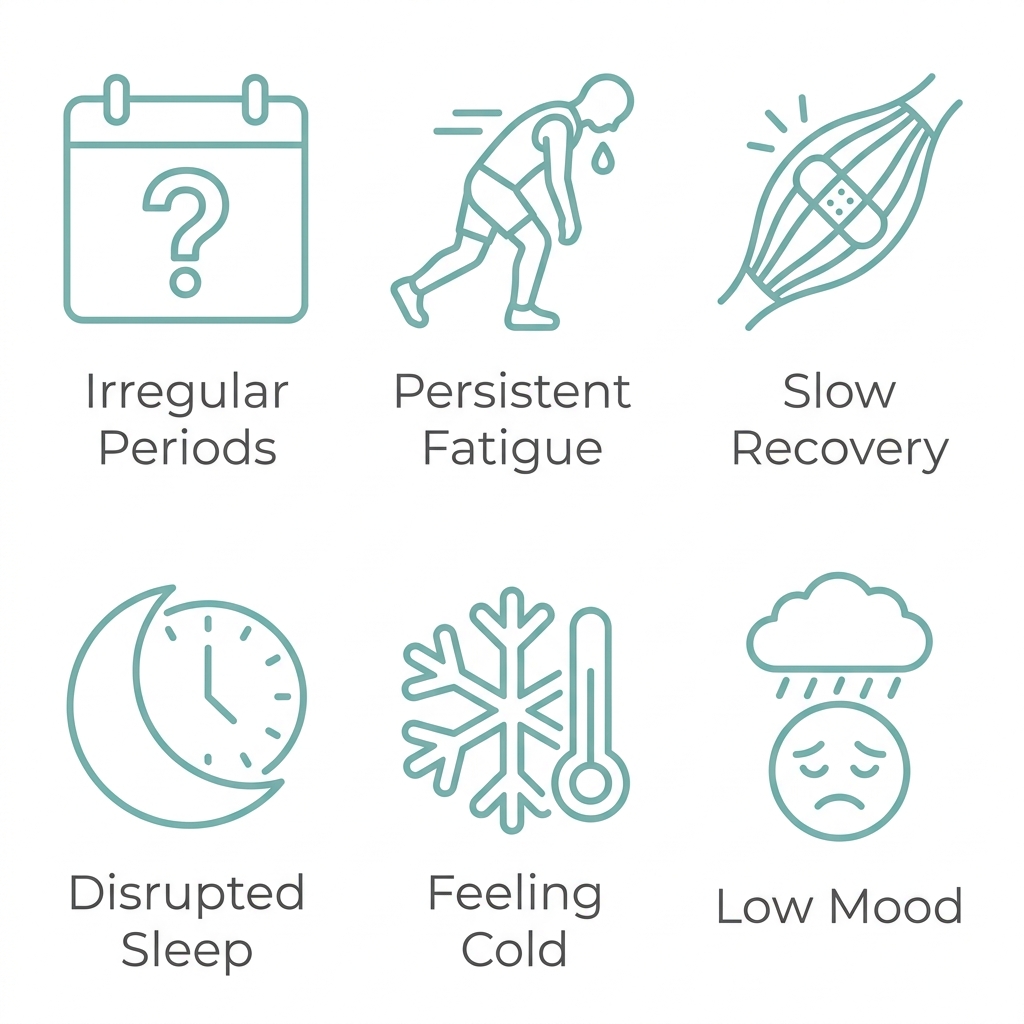
Six icons on a white background illustrate fitness-related fertility warning signs.
How Much Vigorous Exercise Is Safe When Trying to Conceive
Many women wonder whether excessive exercise can affect fertility, and where the safe limit lies. The goal isn’t to avoid movement altogether, but to find a level of activity that supports your body without pushing it too far. Gentle consistency and mindful pacing can make all the difference during this time.
For starters pay attention to how you feel physically. If you’re training hard, keep sessions within a range that feels challenging but sustainable, and always build in rest days to allow recovery. Staying hydrated and avoiding the point of exhaustion helps maintain balance, especially as your cycle responds to the demands you place on it. These aren’t rigid rules, but practical cues to help you calibrate intensity without overdoing it.
Listen to your body’s rhythm. Short, high-intensity workouts can be invigorating, but they should never overshadow your cycle’s natural signals. Pairing shorter bursts with longer, moderate sessions often strikes the right balance, letting you stay active without straining your system. Rest days aren’t optional — they’re part of the process, giving your body space to reset and respond. Regularly checking in with your body’s cues helps you adjust intensity before fatigue or cycle changes become noticeable.
Because every woman's body reacts in different ways. Cycle regularity, general health status, other issues in her body all play into how much activity is too much. If you want to make sure that your levels of activity while trying to get pregnant are safe enough, you need to talk about this issue directly with your gynecologist. Our practice based out of Miramar offers women throughout South Florida the compassionate and personal care that they require to stay healthy during their reproductive years.
When you’re looking at what you would like for yourself, maybe you’ll wonder how exercising plays into the bigger picture concerning your partner’s fertility. When two people decide that they want children, they are taking steps towards building their family, together.
Exercise and Male Fertility: Sperm Count and Quality
Many men wonder whether excessive exercise can affect fertility when they are trying to conceive. The answer is yes—training volume and intensity do matter for sperm parameters.
Too much exercise could reduce sperm quantity and quality for many reasons. Men who work out too much become overheated down there in their groins because prolonged or intense activity raises scrotal and testicular heat, which can temporarily reduce sperm production. So they don't make as much of their little friends. Their tight athletic clothing and lots of consecutive workouts just add to that effect. Intense training could cause the hormonal balance within them to get wacky, especially lowering testosterone, thus affecting sperm development. Oxidative stress from intense physical exertion can further damage sperm DNA and reduce motility. Over time, even in otherwise healthy men, these physiological changes can appear after months of pushing beyond recovery capacity.
Key is balance. Light/moderate exercise tends to support general health but does not cause sperm issues. Chronic endurance training/overtraining is what seems to be associated with low sperm counts and quality issues. We recommend people scale back their exercise volume/intensity, minimize heat exposure during workouts, drink lots of water, and allow recovery time in between intense workouts. Small, simple changes to training routines have a big impact on how your body produces sperm. Examples include reducing run times and/or switching up the intensity at which you train; adding a rest day now and again is also worthwhile if the goal remains maintaining healthy sperm count.
If your sperm count or quality doesn't improve after you change up your training regimen, it's a good idea to get checked. Consider a semen analysis and fertility evaluation to identify any underlying issues and guide next steps toward building a family.
Moderate Exercise That Supports Fertility and IVF Outcomes
Many patients wonder whether can excessive exercise affect fertility and whether cutting back on workouts is necessary during fertility care. The answer isn’t about eliminating movement altogether, but shifting to moderate exercise that supports your body rather than stresses it. Moderate activity keeps your energy balanced, circulation healthy, and stress levels manageable—all of which can contribute positively to your fertility journey.
Moderate exercise could mean being active enough that you can talk without stopping but cannot sing at the top of your lungs. Activities such as brisk walking, gentle cycling, swimming, or restorative yoga would count. The goal here is to be active without exerting yourself too much physically. This type of exercise is gentle enough to maintain without pushing your body into overexertion. For women trying to conceive through IVF, the key isn't how hard they work out, rather whether their exercise routine can continue for some time with ease.
Make sure to adjust your exercise program according to the stages in your treatment. Listen to what your body is telling you on a daily basis, as well as advice from your healthcare provider. If you're used to high-intensity training, try lowering the intensity to more gentle exercises such as walking and prenatal yoga. Don't focus too much on the perfect workout - just find something comfortable and doable for your life schedule without putting any extra pressure on your body.
Start with activities you enjoy so movement remains a positive part of your day. Whether it’s a morning walk, a swim, or a relaxing yoga session, choose something that brings you comfort and peace of mind. Before making changes, check in with your care team to ensure your plan aligns with your treatment timeline and overall health. Every patient’s situation is unique, and what works for one person may not suit another—so personalization is key.
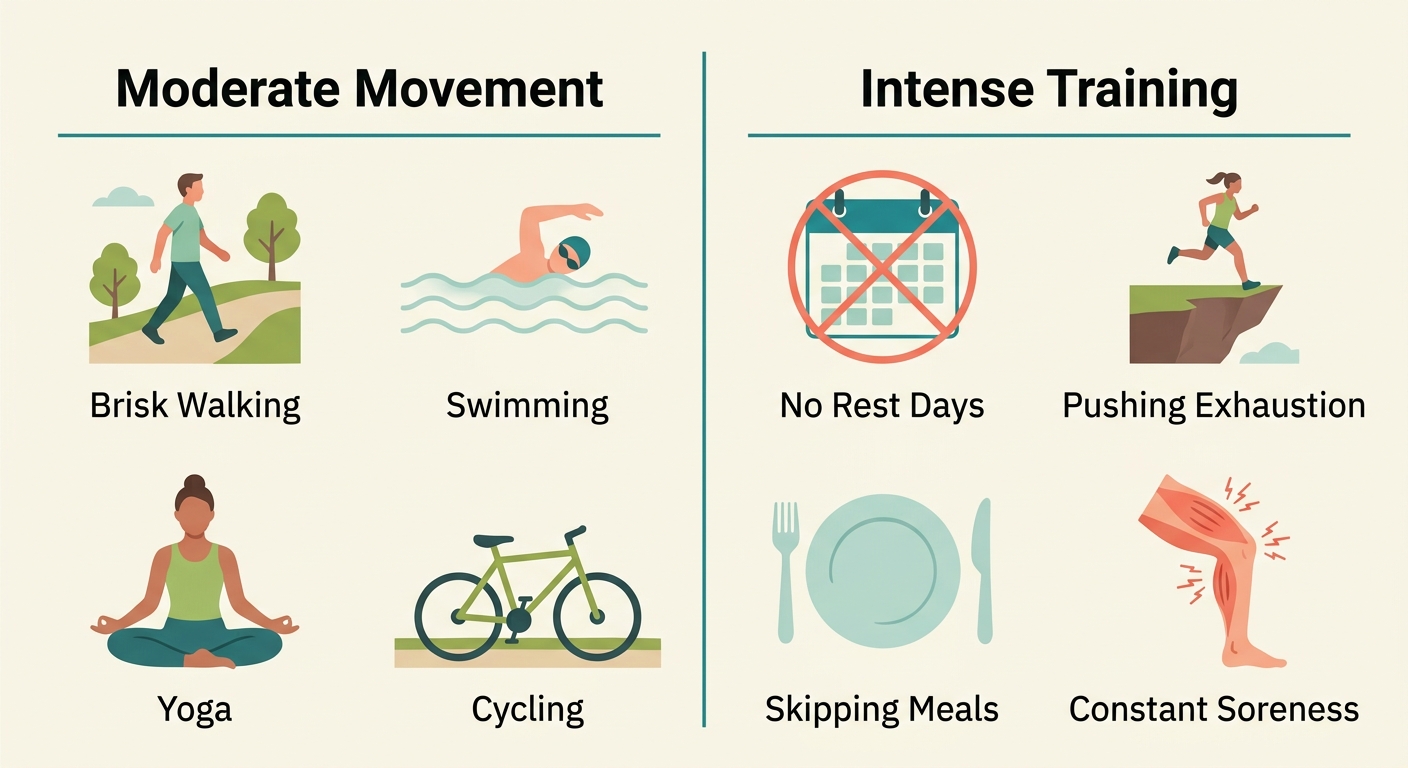
The key when it comes to balancing fitness with fertility therapy is paying attention to what your body tells you. Moderate exercise isn’t just safe—it can be a meaningful way to support your overall well-being as you move through your fertility journey together.
Balancing Fitness and Your Path to Parenthood
If you’ve ever wondered whether intense workouts could be affecting your chances of conceiving, the answer lies in balance. When it comes to exercise and fertility, moderation and consistency support reproductive health and fertility treatment far better than pushing too hard. Light-to-moderate movement nurtures your body while aligning with your unique treatment plan, so sharing your exercise habits with your fertility care provider helps tailor your activity to your needs.
Everyone has their own special way of reacting, but with help from your doctor or a professional coach, you may be able to look out for your health while you build your family.
Individual results might differ depending upon your specific condition. Please consult a health care provider for personalised medical advice and diagnosis.
Talk With a Fertility Specialist
You now understand how moderate movement can support fertility while very intense training may disrupt ovulation and the menstrual cycle for both women and men. Finding the right exercise balance is a personal matter, and it works best when paired with individualized medical guidance. The team at First Class OBGYN in Miramar, Florida is here for you, with infertility and IVF care available to patients across South Florida. You can share your exercise habits and fertility goals during a consultation, and receive advice tailored to your situation. Reach the office at (954) 507-4494 to schedule a visit, or stop by 1951 SW 172 Avenue, Suite 212, Miramar, FL 33029. Office hours are Monday-Friday: 8:00 AM - 8:00 PM and Saturday: 8:00 AM - 3:00 PM. Please consult a healthcare professional for personalised medical advice and diagnosis, and take the next step on your path to parenthood.
Talk With a Fertility Specialist


