


Table of Contents
PCOS Diagnosis and Management: A Guide for South Florida Women
A PCOS diagnosis and management plan is your personalized roadmap to better health—tailored, step-by-step care that addresses your unique symptoms, not a one-size-fits-all protocol. As a board-certified gynecologist practicing in Miramar, in Weston, and in Pembroke Pines, we use diagnostic tools like the Rotterdam criteria for PCOS to guide that plan. You typically meet at least two of the following three criteria:
- Irregular or absent ovulation
- Clinical or laboratory signs of hyperandrogenism
- Polycystic ovaries on ultrasound, after other conditions are ruled out
Once diagnosed, we focus on the factors that matter most to you. PCOS insulin resistance management often includes balanced meals, regular physical activity, weight management, and when clinically indicated, medications such as metformin. As we explain in our hormonal acne treatment guide, skin symptoms like acne and excess hair growth are common with PCOS—and addressing the underlying hormonal pattern is key to restoring confidence.
We invite you to book a personalized consultation at our South Florida locations. We are here for you with Expert Attentive Care and a wonderful blending of friendly and professional support. Individual treatment outcomes depend on patient factors and clinical circumstances; please review our Privacy Policy and Terms of Service for more details.
Diagnosing PCOS: Tests and the Rotterdam Criteria
When signs like irregular cycles, unexplained acne, or excess hair growth point toward PCOS, a thorough pcos diagnosis and management plan begins with the right tests. At First Class OBGYN in Miramar, we combine your health history, a physical exam, and targeted lab work — because no single test can confirm this condition on its own.
We rely on the Rotterdam criteria for PCOS, a standard that requires at least two of these three findings:
- Ovulatory dysfunction – irregular or absent periods that suggest infrequent ovulation.
- Clinical or biochemical hyperandrogenism – signs such as hormonal acne, hirsutism, or elevated testosterone. As we cover in our hormonal acne guide, these visible clues are key in a PCOS workup.
- Polycystic ovarian morphology on ultrasound – ovaries that appear enlarged or contain 12 or more small follicles when viewed by pelvic or transvaginal ultrasound.
Using these Rotterdam criteria helps us build a clear, evidence-based picture for every woman we see in South Florida.
Once we suspect PCOS, we order a focused panel: total and free testosterone, luteinizing hormone (LH), and follicle-stimulating hormone (FSH) — many patients show an elevated LH-to-FSH ratio. Anti-Müllerian hormone (AMH) may also be checked, and we routinely add TSH, prolactin, and adrenal screening to rule out other conditions. A pelvic or transvaginal ultrasound can reveal the classic polycystic pattern: larger ovaries bearing many small resting follicles, which supports the Rotterdam criteria.
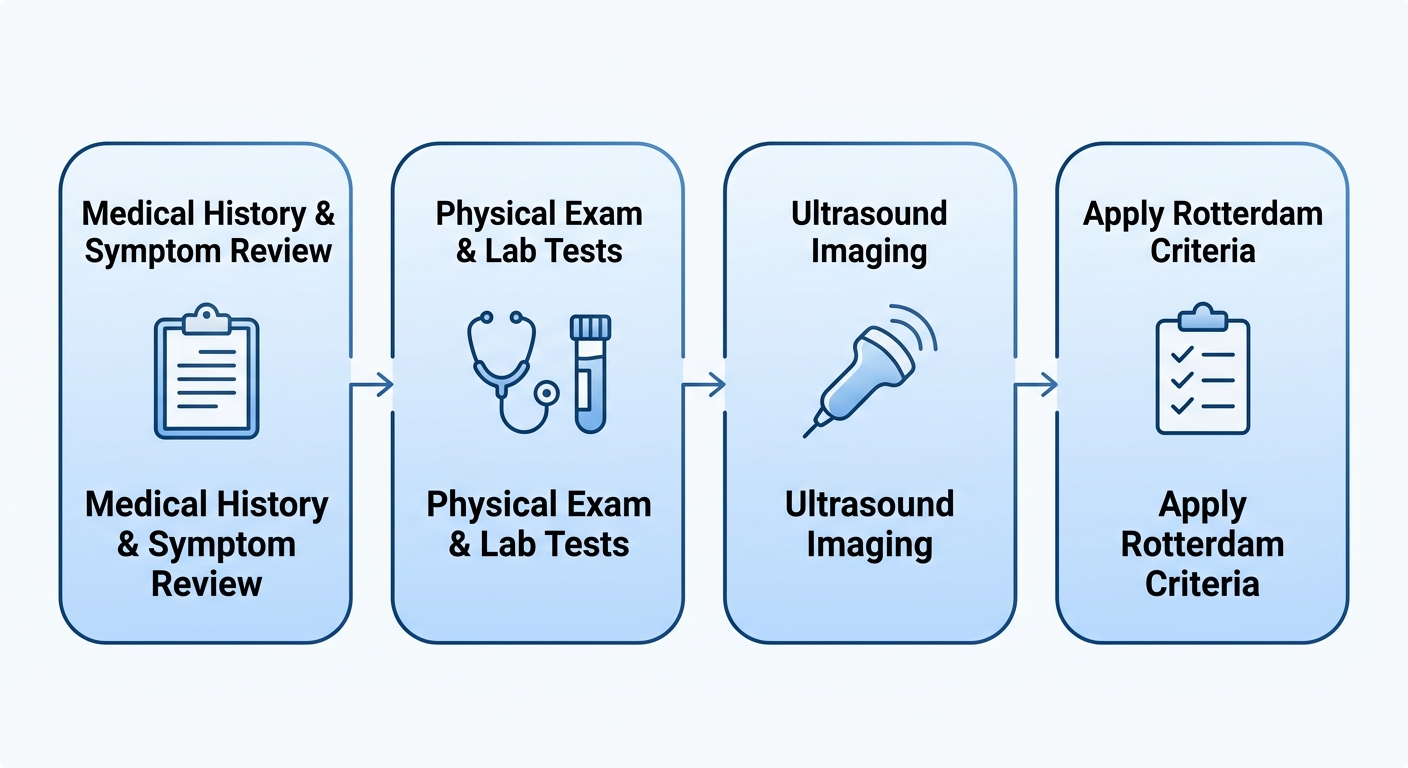
Because insulin resistance often accompanies PCOS, we often add fasting glucose and insulin levels (HOMA-IR) to the metabolic screen. This early pcos insulin resistance management step directly shapes the full pcos diagnosis and management plan that follows.
Before finalizing a PCOS diagnosis, we confirm that thyroid, prolactin, and adrenal assessments are normal, as these conditions can mimic PCOS symptoms and must be excluded.
At First Class OBGYN, we are here for you with Expert Attentive Care and a genuine commitment to helping women restore their confidence through a correct diagnosis. Individual results vary, and a diagnosis should always be made by a qualified healthcare professional after a full evaluation. Please visit us in Miramar, Weston, or Pembroke Pines to begin your personalized workup. For details about how we protect your information, please review our Privacy Policy and Terms of Service pages.
Insulin Resistance and Weight Management in PCOS
For many women with PCOS, understanding insulin resistance is essential to building an effective pcos diagnosis and management plan. In simple terms, when cells become less responsive to insulin, the body makes more insulin, which can raise androgen levels and aggravate weight gain, acne, and irregular cycles. Because higher insulin also promotes fat storage and makes weight loss harder, addressing insulin resistance becomes a core part of pcos weight management.
A formal diagnosis often relies on the rotterdam criteria for pcos, which require a combination of features such as irregular ovulation, signs of elevated androgens, and polycystic ovaries seen on ultrasound. When insulin resistance drives up androgen production, it can intensify both metabolic and skin-related symptoms—our internal hormonal acne treatment guide explains this connection in greater detail. Recognizing this overlap helps us tailor a personalized pcos care plan that tackles the root insulin dysfunction, not just surface symptoms.
At First Class OBGYN, our pcos insulin resistance management approach brings together lifestyle strategies and medical support where appropriate. Nutrition plans emphasizing balanced meals and lower-glycemic choices may help stabilize blood sugar, while regular physical activity can improve how the body uses insulin. We also guide you through the importance of sleep and stress reduction, because both influence hormone balance. When needed, insulin-sensitizing medications may be considered under close professional supervision, always within an individualized framework. Throughout this journey, our team in Miramar, Weston, and Pembroke Pines delivers Expert Attentive Care, blending friendly support with medical precision to help you feel confident.
Every woman’s experience with PCOS is unique, so we design each pcos diagnosis and management plan to address her symptoms, metabolic health, and quality of life—not just weight. We invite you to schedule an initial consultation at one of our South Florida locations to start building a plan that’s right for you. Results may vary based on individual patient conditions and circumstances. Please consult a healthcare professional for personalised medical advice and diagnosis.
Long-Term Health Risks of Untreated PCOS
Living with polycystic ovary syndrome (PCOS) without a clear PCOS diagnosis and management plan can quietly heighten the risk for several serious health conditions over time. While this can sound concerning, we want to reassure you: early identification and consistent, personalized care can greatly reduce these risks and help you feel in control of your health. These risks, though real, are highly manageable with the right approach.
Metabolic effects: Insulin resistance, a hallmark of PCOS, can lead to prediabetes and type 2 diabetes when unmanaged. PCOS insulin resistance management through lifestyle changes and medical support can help keep blood sugar stable and lower the chance of long-term complications. As part of a PCOS diagnosis and management plan, we work with you to catch insulin issues early and design strategies that fit your lifestyle.
Cardiovascular concerns: Women with PCOS often have dyslipidemia, high blood pressure, and metabolic syndrome, which together raise heart health risks. Routine screening and lifestyle steps are essential for protection. Regular monitoring of blood pressure and cholesterol can catch changes before they become problems, giving you powerful tools to safeguard your heart.
Reproductive health: Chronic anovulation exposes the uterine lining to unopposed estrogen, raising the risk of endometrial hyperplasia and, over time, endometrial cancer. Standardized diagnosis using the Rotterdam criteria for PCOS helps us spot these patterns early. Irregular ovulation also makes conception difficult, and when pregnancy occurs, gestational diabetes and preeclampsia are more common.
Psychological well-being: Visible symptoms like hormonal acne—discussed in our hormonal acne guide—and hirsutism can affect body image and self-esteem, and are linked to higher rates of anxiety and depression in women with PCOS. Addressing these concerns with compassionate care can make a real difference in your daily life.
Associated conditions: PCOS is also linked to obstructive sleep apnea and non-alcoholic fatty liver disease, reminding us that this condition affects the whole body. We evaluate for these when building your care plan, because treating PCOS comprehensively often improves these linked issues as well.
The long-term outlook for PCOS is far from fixed. By establishing a PCOS diagnosis and management plan with a knowledgeable gynecologist, you can protect your future health. Results vary based on individual patient conditions—please consult a healthcare professional for personalized advice. At First Class OBGYN, we help women across South Florida navigate PCOS with expert, attentive care so you never have to face these risks alone.
Medical Management and Fertility Support for PCOS
Polycystic ovary syndrome (PCOS) is a prevalent endocrine disorder that can affect menstrual regularity, hormonal balance, and fertility. Creating a personalized pcos diagnosis and management plan is the first step toward symptom relief and reproductive well-being. At First Class OBGYN, we combine advanced diagnostics with compassionate support to help you navigate this condition. Our multidisciplinary approach addresses not only the physical symptoms but also the emotional impact of PCOS.
The rotterdam criteria for pcos provide the framework for an accurate diagnosis. According to these guidelines, a PCOS diagnosis requires at least two of the following three features: irregular or absent ovulation (oligo-ovulation or anovulation), clinical or laboratory evidence of elevated androgens (hyperandrogenism), and the presence of multiple small follicles on an ovarian ultrasound (polycystic ovaries). It is equally important to exclude other conditions that can mimic PCOS, such as thyroid disease, hyperprolactinemia, and non-classic congenital adrenal hyperplasia. This thorough evaluation helps us ensure you receive the right diagnosis and a targeted management plan.
Managing PCOS involves addressing both metabolic and hormonal symptoms. PCOS insulin resistance management is central, as insulin resistance contributes to weight gain and elevated androgen levels. We recommend a combination of dietary adjustments—emphasizing low-glycemic foods—regular physical activity, and, when appropriate, metformin therapy to improve insulin sensitivity. For menstrual cycle regulation and reduction of androgen-driven hirsutism, combined oral contraceptives are often prescribed. In select cases, anti-androgen medications like spironolactone may be considered for persistent hirsutism or acne, with careful monitoring. When acne is a significant concern, our hormonal acne treatment guide outlines evidence-based strategies to manage breakouts. Every pcos diagnosis and management plan we create is tailored to your specific symptoms and fertility goals. Each intervention is selected after a thorough review of your health history and personal goals.
When pregnancy is a goal, we provide dedicated fertility support. Preconception counseling helps us optimize your metabolic health, regulate ovulation, and address any nutritional needs. Maintaining a healthy weight and managing insulin resistance can improve ovulation and pregnancy outcomes, so we integrate lifestyle strategies into your care. Ovulation induction with medications like letrozole or clomiphene can stimulate regular egg release. While success rates vary, many women with PCOS conceive with appropriate medical guidance; we create a step-by-step fertility plan tailored to your situation, never promising guaranteed results.
At our Miramar clinic, you receive Expert Attentive Care from a board-certified team that understands the physical and emotional dimensions of PCOS. Our initial consultations, personalized treatment plans, and follow-up programs are designed to evolve with your needs. We are here for you, committed to helping you restore confidence and move forward with clarity.
Please consult a healthcare professional for personalised medical advice and diagnosis.
Effective Lifestyle Changes for PCOS Symptom Relief
Creating a comprehensive PCOS diagnosis and management plan means looking beyond medication and recognizing the powerful role of daily habits. At our Miramar practice, we emphasize that small, consistent changes in diet, physical activity, stress management, and sleep can support hormonal balance and overall well-being. The infographic below highlights these four key areas.
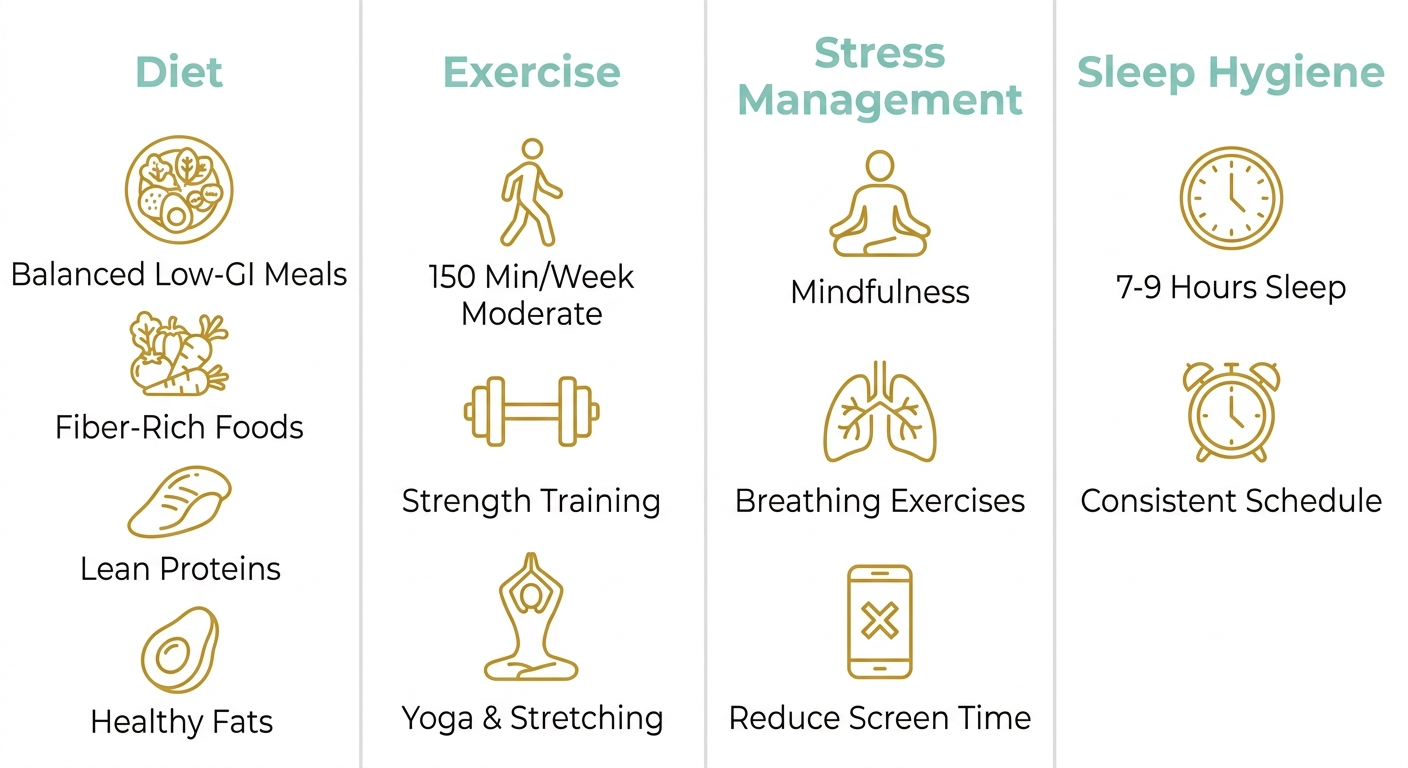
Dietary habits play a central role in PCOS insulin resistance management. For women whose diagnosis relies on the Rotterdam criteria for PCOS—characterized by irregular cycles and elevated androgens—stabilizing blood sugar through low-glycemic foods becomes particularly important. Focusing on whole grains, legumes, and non-starchy vegetables helps keep blood sugar stable. Pairing fiber-rich carbohydrates with lean proteins (chicken, fish, tofu) and healthy fats (avocado, olive oil, nuts) can reduce insulin spikes and curb cravings. Simple swaps, like water instead of sugary drinks or adding vegetables to every meal, contribute to lasting metabolic health.
Physical activity is another foundational pillar. We recommend aiming for at least 150 minutes of moderate-intensity aerobic exercise each week—brisk walking, cycling, or swimming all count. Adding two sessions of resistance training (bodyweight exercises, bands, or weights) further supports metabolism and insulin sensitivity. This combination helps manage weight, reduces androgen levels, and boosts mood, all beneficial when managing PCOS symptoms.
Stress and sleep are often overlooked yet crucial. Our hormonal acne treatment guide notes that chronic stress can amplify androgen-driven skin issues, so lowering cortisol through deep breathing, yoga, or mindfulness is especially important. Equally vital is sleep: aiming for 7–9 hours of quality rest each night helps regulate hunger hormones, reduce cravings, and support hormonal equilibrium. A consistent bedtime routine can make a noticeable difference.
Weight management for many women involves modest reduction—around 5–10% of body weight when appropriate—which can improve menstrual regularity and insulin sensitivity. However, we never frame weight loss as a cure, and any weight management approach should be discussed with your healthcare provider to ensure safety and personalization.
Every woman’s PCOS diagnosis and management plan should be personalized. We are committed to helping women restore their confidence by combining evidence-based medicine with sustainable habits. If you’re in South Florida, our Miramar team can help. Results may vary based on individual patient conditions and circumstances. Please consult a healthcare professional for personalised medical advice and diagnosis.
Your Path to Better PCOS Health and Wellness
A pcos diagnosis and management plan is your first step toward reclaiming your health and confidence. A clinical diagnosis often relies on established tools like the rotterdam criteria for pcos, which help form a holistic picture of your symptoms, hormone patterns, and ultrasound findings. Understanding your diagnosis opens the door to a personalized care journey.
Effective management addresses both immediate symptoms and underlying drivers. Many plans include pcos insulin resistance management through targeted lifestyle changes and medication strategies that support metabolic balance. We pair medical expertise with compassionate support, recognizing that skin concerns like hormonal acne can be part of the bigger picture.
We are here for you with Expert Attentive Care and a wonderful blending of friendly and professional guidance. Schedule an initial consultation at our practice in Miramar, Florida, also convenient to Weston and Pembroke Pines, and let us build a plan that evolves with your needs. Please consult a healthcare professional for personalised medical advice and diagnosis. Individual treatment outcomes depend on patient factors and clinical circumstances.


