


Table of Contents
IVF Success and Maternal Age: What Every Woman Should Know
Many women wonder at what age IVF is likely to fail, and national data show success rates decline significantly with advancing maternal age. According to the CDC, these outcomes also vary by diagnosis and reproductive history, so averages may not reflect individual chances. This article draws on official national data to explain how age shapes IVF success and what you can consider next as you plan your path forward.
1. IVF Success Starts Slipping in Your Early 30s
Many women wonder at what age IVF is likely to fail, and the answer begins in the early 30s. According to the CDC’s national data, IVF success rates for patients using their own eggs begin to decline noticeably as maternal age increases, reflecting the biological reality that egg quality and quantity naturally diminish over time.
The CDC’s Assisted Reproductive Technology (ART) Success Rates tool indicates that results vary based on your diagnosis and reproductive history, so age is only one factor, but not the only one. The interactive IVF Success Estimator can help people learn more about how age and other personal factors might affect their chances, giving them a better understanding when they discuss the matter with a fertility specialist. The tool also makes clear that cumulative success rates include transfers within one year of egg retrieval, which can make the outlook even more individualized.
This steady shift in success rates over time suggests that the biological reason for these numbers is the reduction in egg supply.
2. Your Egg Reserve Shrinks Faster Than You Think
Most women are shocked to learn that their egg supply has been diminishing since their early 30s, despite feeling healthy and active. The natural reduction actually starts much earlier than most people think.
ovarian reserve refers to the supply of eggs that you have at any time. As years go by, this supply of eggs slowly diminishes as they are used up or naturally decrease, which is why your age is such an important factor when considering fertility. Based on CDC data for IVF success rates, success drops dramatically as the mother gets older, and the reduced egg supply is largely to blame.
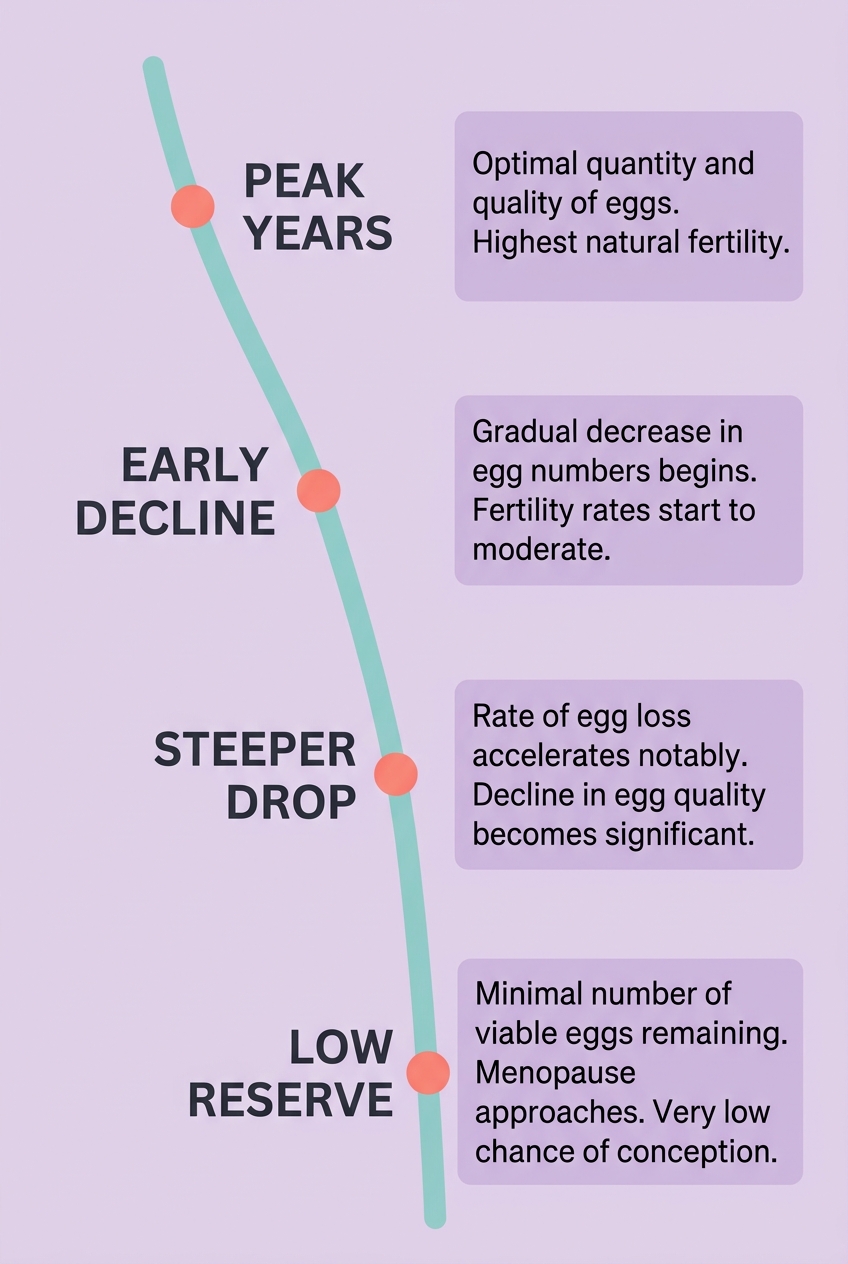
It’s not only about how many eggs remain, but also about the quality of those eggs, which changes too and matters just as much after 35.
3. Egg Quality Falls Sharply After 35
We know that our egg quantity goes down as we get older, but our egg quality drops even more dramatically after 35. This is why people often wonder when IVF is more likely to fail: it depends on how poor egg quality affects our chances of implanting an embryo and having a live birth.
The agency's national surveillance data indicates that IVF success rates decrease dramatically as the mother gets older, and cumulative live-birth outcomes vary based on diagnosis and reproductive history. The online tool allows users to look up clinic-level data for their state or zip code, and it distinguishes between cycles where the patient used her own eggs versus donor eggs.
The agency's free IVF Success Estimator gives you a personalized estimate using your age, height, weight, prior IVF cycles, and pregnancy history to provide a live-birth probability based on national data from 2016-2018. It is for users ages 20 to 50, provides informational estimates only, and does not store any personal information.
4. Miscarriage Risk Climbs With Each Birthday
The older a woman’s eggs get, the more likely it is that she will miscarry. We tell our patients that as the years pass, there is a direct link between how old the eggs are and their lowered quality, starting after 35.
According to the agency, assisted reproduction success rates decline as a mother’s age increases. Their national data also demonstrates that using a woman’s own eggs versus donor eggs will have different outcomes. The CDC’s site has five separate tabs per clinic that help users look at the services offered, patient demographics, and performance outcomes, and we recommend using the CDC’s interactive tools to see clinic and age specific outcomes for your own case.
This link between age and both miscarriage risk and IVF success is why personalized fertility care becomes more and more crucial for older women.
5. IVF After 40: How the Numbers Compare
People usually wonder when IVF is likely to fail, and the answer lies in the steep decrease in live birth rates as maternal age increases. The agency's data shows a significant drop in IVF success rates in the early forties, which can be due to aging that impacts egg quality and the uterus's ability to carry a pregnancy. While a woman's age has a strong impact on outcomes, other variables such as diagnosis and history can also affect this, so the experience is different for each.
You can enter your age, height, weight and medical history into the agency's IVF Success Estimator to receive customized estimates based on national surveillance data. While this tool is helpful, please keep in mind that it gives you information-based estimates and should not be used as a replacement for speaking with your fertility specialist. You can also compare real clinic results using CDC data filtered by zip code and cycle type to find a clinic that fits your needs.
Now, let's see when IVF with her own eggs is unlikely.
6. When IVF With Your Own Eggs Becomes Unlikely
Many patients wonder at what age IVF is likely to fail when using their own eggs. As maternal age advances, the likelihood of a successful live birth with own eggs declines significantly, which is why the CDC’s national ART success rate data stratifies outcomes by age.
These figures represent cumulative live birth rates from all embryo transfer cycles in one year, so they give a more accurate representation of the odds rather than just for one cycle. Success rates also differ depending on diagnosis and reproductive history, so national percentages may not reflect what you can expect. The CDC provides tools that allow you to look at data specific to the clinics and adjust your estimates accordingly.
The biology might create such odds, but this is not necessarily the end of your road to becoming a parent using your own eggs. Now you can sit down with a fertility doctor and discuss all of your options at your very own personalized consultation.
7. The Science Behind Declining Egg Quality
We often tell our patients that the body’s natural timeline is what makes IVF so challenging. The less eggs you have and the older the eggs get, the worse the quality gets and the more errors there are in the chromosomes within the egg. All this means there are fewer eggs to be fertilized, fewer to implant, and fewer to give you a healthy live birth if you use your own eggs.
According to the agency, chances of success for IVF decline as a woman ages, but outcomes depend on diagnosis and reproductive history. The agency also tracks separate rates of own-egg vs. donor-egg cycles, with donor eggs being those collected from younger donors and generally having higher rates. Patients can get personalized estimates using the the agency's IVF Success Estimator.
The point of learning this process is not to feel guilty; it's to get it right. Understanding what happens to the egg when it ages gives you the information needed to make good choices for your family.
8. Real Options to Improve Your IVF Odds
Egg quality will naturally deteriorate as women get older but patients have some choices in regards to their IVF outcome. Patients often ask us at what age is IVF likely to fail and it all depends on their personal factors such as diagnosis and reproductive history.
Agency data show that success rates fall as the mom gets older, and maternal age is the strongest predictor of success. Their national surveillance also demonstrates large differences between clinics and among patient profiles.
The agency's free IVF Success Estimator provides a personalized live birth estimate based on your age, height, weight, previous IVF cycles, and pregnancy history.
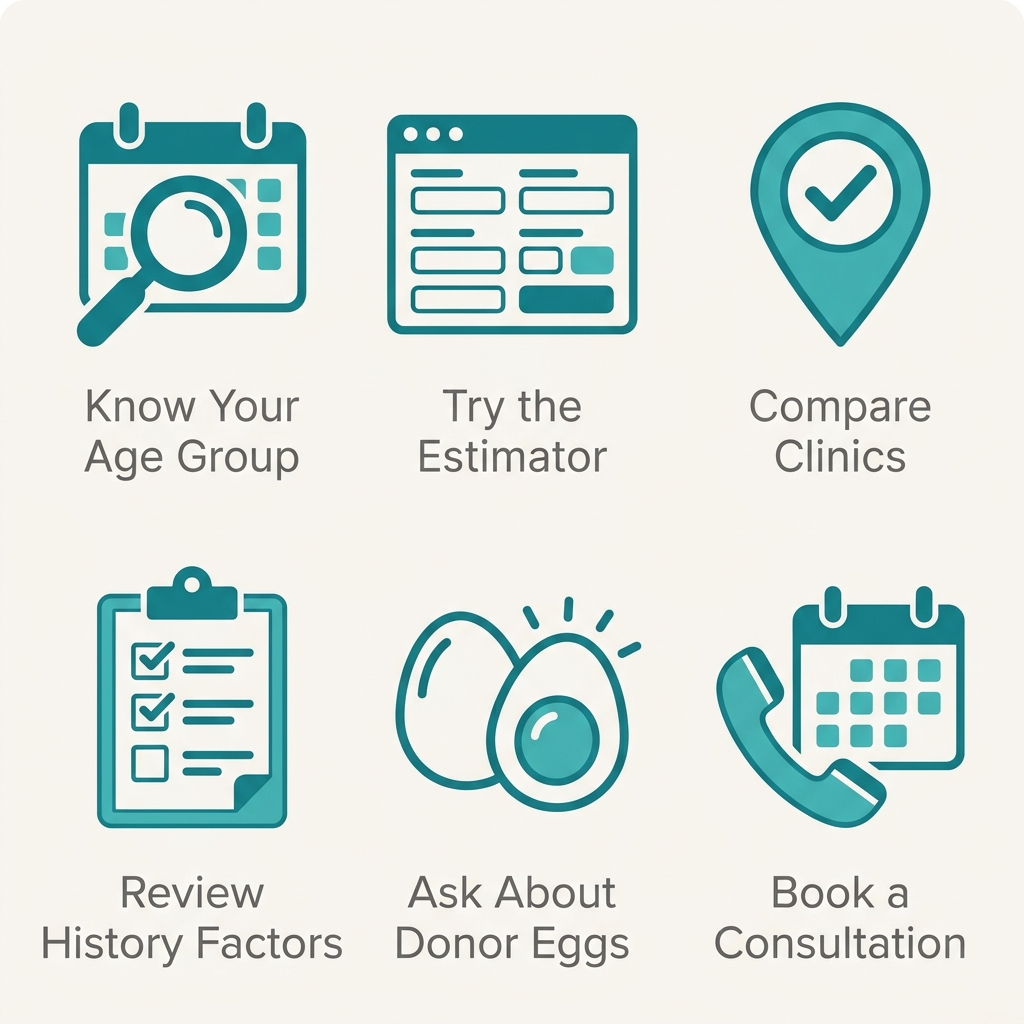
Your numbers need an individual analysis. Our team can assist you in exploring options that are right for you.
Your Next Step Toward Personalized Fertility Answers
If you're asking at what age is IVF likely to fail, it really depends. The CDC states that pregnancy rates vary greatly based on a woman’s age, diagnosis, and reproductive history, so general stats don't give you the full picture when it comes to your real chances.
We highly recommend that you take a look at the agency's IVF Success Estimator, which is free to use and generates a personalized live birth estimate based on age, height, weight, past IVF cycles, and pregnancy history using national surveillance data. The tool is only for informational purposes, does not store any information about you, and cannot replace your conversations with your doctor.
Results may differ based on your unique situation, we suggest scheduling a consult to discuss your personalized treatment plan.
Get Personalized Fertility Answers Today
You've seen how IVF success changes with age, from the gradual decline in the early 30s to the sharper shifts after 35 and 40, according to agency data. The egg reserve and quality insights in this article show why timing matters, but your individual picture depends on more than national averages. Diagnosis and reproductive history all shape your real odds. The CDC's IVF Success Estimator is a helpful starting point, yet it cannot replace guidance from a fertility specialist who knows your full history. At First Class OBGYN in Miramar, Florida, our team can walk you through every option in a personalized consultation. We serve patients across South Florida, including Weston and Pembroke Pines, and we take time to answer your questions honestly and compassionately. Call us at (954) 507-4494 to schedule your visit and turn these statistics into a plan that fits you.


