Do you find our website to be helpful?
Yes   No
Skip to main content

First Class OBGYN

OB-GYN located in Florida

About Practice

At First Class OB/GYN in South Florida, Dr. Anghel provides women with treatment and care for a wide range of gynecological and urinary problems, as well as obstetric care. He’s a board-certified obstetrician and gynecologist in the United States and a board-certified surgeon in the European Union.

Dr. Anghel stays current on the latest technology, techniques, and treatments in order to provide women with the safest and most effective care. He’s committed to ensuring that patients feel comfortable and confident about the treatments and care they receive, whether they need obstetric care, gynecological treatments, or urogynecological treatments. Dr. Anghel speaks English, Romanian, and Spanish, allowing him to communicate clearly with all patients.

Dr. Anghel earned his medical degree from the Carol Davila University of Medicine and Pharmacy in Bucharest, Romania. He completed a general surgery residency at the same school and an OB/GYN internship at Panait Sarbu Hospital in Bucharest before coming to the U.S. to do a residency in OB/GYN at Flushing Hospital Medical Center in Queens, New York.

Dr. Anghel’s dedication to making sure that he provides the highest quality care for women in is reflected in his many board certifications and professional affiliations. In addition to being board-certified, he’s also a Fellow at American College of Obstetricians and Gynecologists and a member of the American Congress of Obstetricians and Gynecologists. Dr. Anghel’s knowledge and expertise in minimally invasive surgery have also earned him a place in the American Association of Gynecologic Laparoscopists. 

At First Class OB/GYN in South Florida, Dr. Anghel provides women with treatment and care for a wide range of gynecological and urinary problems, as well as obstetric care. He’s a board-certified obstetrician and gynecologist in the United States and a board-certified surgeon in the European Union.

Dr. Anghel stays current on the latest technology, techniques, and treatments in order to provide women with the safest and most effective care. He’s committed to ensuring that patients feel comfortable and confident about the treatments and care they receive, whether they need obstetric care, gynecological treatments, or urogynecological treatments. Dr. Anghel speaks English, Romanian, and Spanish, allowing him to communicate clearly with all patients.

Dr. Anghel earned his medical degree from the Carol Davila University of Medicine and Pharmacy in Bucharest, Romania. He completed a general surgery residency at the same school and an OB/GYN internship at Panait Sarbu Hospital in Bucharest before coming to the U.S. to do a residency in OB/GYN at Flushing Hospital Medical Center in Queens, New York.

Dr. Anghel’s dedication to making sure that he provides the highest quality care for women in is reflected in his many board certifications and professional affiliations. In addition to being board-certified, he’s also a Fellow at American College of Obstetricians and Gynecologists and a member of the American Congress of Obstetricians and Gynecologists. Dr. Anghel’s knowledge and expertise in minimally invasive surgery have also earned him a place in the American Association of Gynecologic Laparoscopists. 


Read less

Understanding Urinary Incontinence in Fort Lauderdale

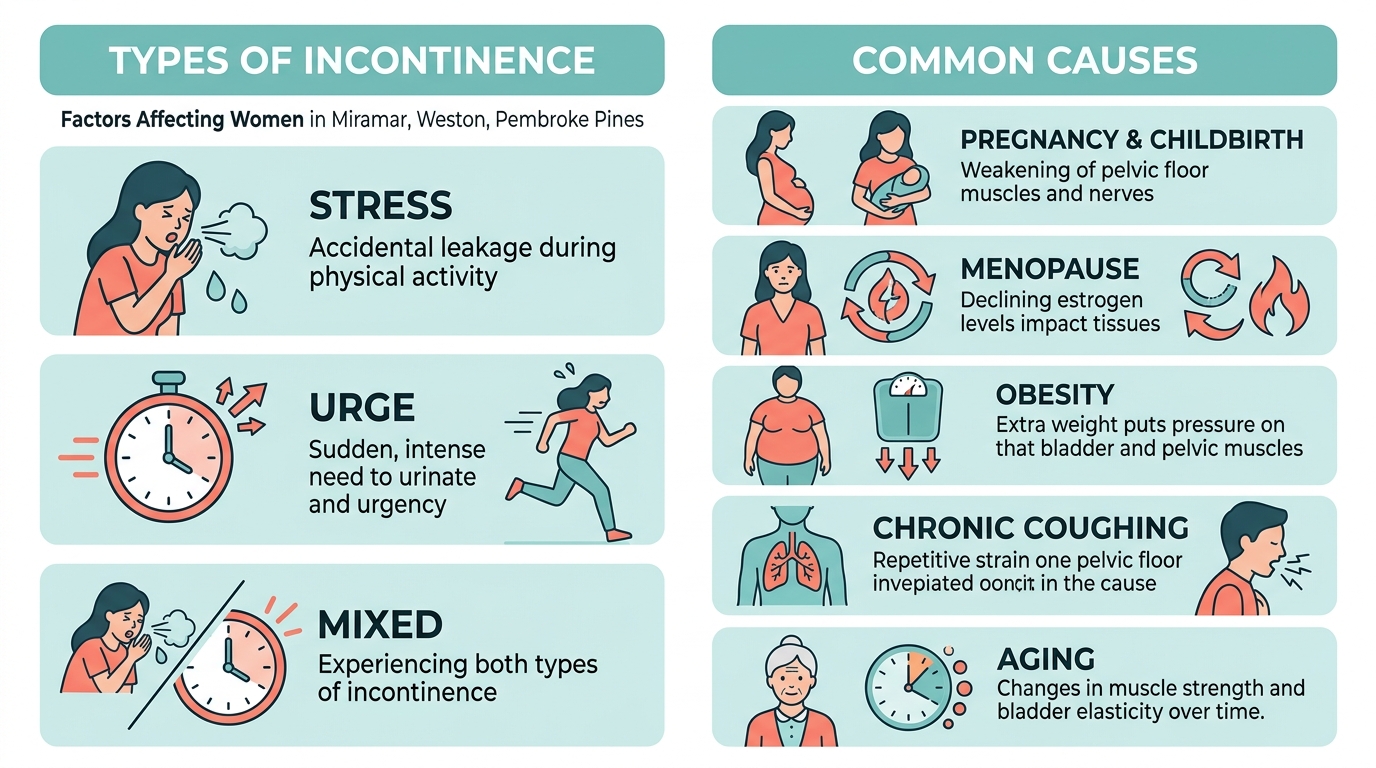
Understanding urinary incontinence in Fort Lauderdale starts with recognizing its types and underlying causes. Urinary incontinence is the involuntary leakage of urine, a condition that affects millions of women across all ages. The three main types are stress urinary incontinence, urge incontinence (often called overactive bladder), and mixed incontinence, which is a combination of both.

A variety of factors familiar to many women in our community can contribute to bladder control problems. Pregnancy and childbirth may weaken pelvic floor muscles, while menopause reduces estrogen levels that support urethral strength. Excess weight, pelvic surgery, and the natural changes of aging also increase risk. The Office on Women's Health reports that more than 4 in 10 women over age 65 experience urinary incontinence, though it can affect younger women as well. It is essential to understand that urinary incontinence is not a normal part of aging--and it is treatable. For women in our community, understanding these risk factors empowers them to seek the care they deserve.

Recognizing the specific type of incontinence is a vital first step toward relief. Women in Fort Lauderdale can access expert urinary incontinence treatment at Dr. Anghel's practice, where we deliver expert, attentive care and combine advanced medical approaches with personalized support. Next, we explore how lifestyle factors and specific conditions can trigger or worsen symptoms.

The Fundamentals of Urinary Incontinence: Causes and Types

Urinary incontinence in Fort Lauderdale is a common condition that affects many women, yet it is not a normal part of aging. It refers to involuntary urine leakage, ranging from a few drops to complete bladder emptying. The two most common types--stress incontinence and urge incontinence--have distinct causes and triggers, and identifying which type you have is the first step toward effective treatment.

Stress Incontinence

According to Mayo Clinic, stress incontinence occurs when physical pressure on the bladder--such as coughing, sneezing, or exercise--overcomes weakened pelvic floor muscles, causing urine leakage. Common risk factors include pregnancy, childbirth, menopause, obesity, and age-related muscle loss. Neurological disorders such as multiple sclerosis or stroke can also impair bladder control. Many women first notice symptoms after pregnancy or during menopause when estrogen levels decline, weakening pelvic tissues. High-impact activities and obesity add chronic pressure on the bladder. First-line approaches for stress incontinence treatment focus on strengthening the pelvic floor. The American College of Obstetricians and Gynecologists (ACOG) recommends Kegel exercises, lifestyle modifications, and physical therapy. Physical therapists teach proper techniques to engage the right muscles, and avoiding bladder irritants like caffeine can also help reduce leakage.

Urge Incontinence

Mayo Clinic explains that urge incontinence, often called overactive bladder, results from sudden involuntary bladder contractions that create an urgent need to urinate, often leading to leakage before reaching the bathroom. The sensation can be so overwhelming it disrupts daily activities and sleep. Common triggers include cold weather, running water, anxiety, or sudden position changes. Underlying causes range from neurological conditions like multiple sclerosis and Parkinson's disease to diabetes, constipation, and bladder irritants. For men, an enlarged prostate can contribute. For overactive bladder treatment, behavioral therapies are first-line. ACOG guidelines emphasize bladder training to normalize urination intervals and medications that calm bladder spasms. Neuromodulation therapies are reserved for more persistent cases. Keeping a bladder diary and avoiding caffeine and alcohol can also help reduce symptoms.

To highlight these differences, the following table compares stress and urge incontinence:

Comparison of Stress Incontinence vs. Urge Incontinence
FeatureStress IncontinenceUrge Incontinence
CausePhysical pressure on the bladder (coughing, sneezing, exercise)Involuntary bladder contraction (sudden, strong urge)
Common SymptomsLeakage with movement, laughing, liftingNeeding to urinate urgently; leakage before reaching the bathroom
TriggersPhysical activity, coughing, sneezing, exerciseCold weather, running water, anxiety, sudden changes in position
Common First-Line TreatmentsPelvic floor exercises, lifestyle changes, physical therapyBladder training, medications, neuromodulation

Understanding which type you have guides the most effective treatment approach. While stress and urge incontinence differ, many women experience mixed incontinence--a combination of both. Both conditions are highly treatable with a range of options, from pelvic floor therapy to medication. Our board-certified urogynecologists at First Class OBGYN provide expert diagnosis and personalized care. For compassionate, expert treatment, consider Urinary Incontinence Treatment In Fort Lauderdale at our practice.

Infographic comparing stress incontinence caused by physical triggers like coughing and exercise with urge incontinence triggered by sudden urges like cold water and anxiety, showing causes, symptoms, triggers, and treatments without titles.

Comparison infographic of stress vs urge incontinence with triggers and treatments

Stress Incontinence vs. Overactive Bladder: Key Differences and Treatment Approaches

For women in Fort Lauderdale seeking answers about urinary incontinence, our team at First Class OBGYN provides expert and attentive care. Urinary Incontinence Fort Lauderdale--whether stress, urge, or mixed--can be effectively managed when correctly diagnosed. Understanding the type of incontinence you have is the first step toward effective treatment.

Understanding Stress Incontinence

Stress incontinence results from weakened support of the urethra, most commonly due to urethral hypermobility or intrinsic sphincter deficiency. According to the Urology Care Foundation, childbirth, aging, and pelvic surgery are frequent causes. Leakage occurs with physical activities that increase abdominal pressure--such as coughing, laughing, or exercising--and typically does not involve a preceding urge to urinate. Stress incontinence treatment often begins with pelvic floor exercises and behavioral strategies; our team's expert and attentive care ensures each woman receives a tailored plan from the outset.

Understanding Overactive Bladder (Urge Incontinence)

Overactive bladder (OAB) is defined by involuntary detrusor muscle contractions that produce a sudden, intense need to void. Mayo Clinic notes that neurological conditions like Parkinson's disease or stroke can trigger OAB, though many cases remain idiopathic. Unlike stress incontinence, physical activity does not directly cause leakage; instead, patients experience urgency and frequency, often with leakage before reaching the toilet. While mild symptoms may improve with lifestyle modifications, our overactive bladder treatment plans include medication and advanced therapies like InterStim neuromodulation, always guided by the safest and most effective care.

Non-Surgical Treatment Options for Both Types

Many women achieve significant improvement without surgery. Behavioral therapy--including bladder training and timed voiding--is particularly effective for urge incontinence, as confirmed by the Urology Care Foundation. Pelvic floor biofeedback uses sensors to teach correct Kegel exercises, offering a key stress incontinence treatment. For some, mechanical devices such as pessaries provide additional support. Medications also play a role, with options that relax the bladder or tighten the sphincter. Our team prioritizes the safest and most effective care, combining evidence-based approaches to reduce symptoms and restore confidence.

The following table compares common non-surgical approaches our team recommends.

Non-Surgical Treatment Options Comparison
Treatment TypeHow It WorksBest ForConsiderations
Behavioral TherapyBladder training, scheduled voiding, fluid managementUrge incontinence; mild to moderate symptomsRequires commitment; effective when combined with other therapies
MedicationsRelax bladder muscle or tighten urethral sphincterOveractive bladder; some stress incontinence optionsPossible side effects (dry mouth, constipation); not always covered
Pelvic Floor BiofeedbackUses sensors to teach correct pelvic floor muscle exerciseStress incontinence; patients struggling with Kegels aloneOften covered by insurance; requires special equipment
Mechanical Devices (e.g., pessary)Vaginal support device that lifts the bladder neckStress incontinence; women who cannot undergo surgeryMust be fitted by provider; periodic cleaning required

Medications for Incontinence: What You Should Know

Medication choices vary markedly between the two conditions. For overactive bladder, anticholinergics such as oxybutynin and beta-3 agonists like mirabegron are first-line agents. Mayo Clinic reports that these drugs relax the bladder muscle but may cause dry mouth, constipation, and blurred vision. Duloxetine, an off-label option for stress incontinence, provides modest improvement yet carries potential side effects including urinary retention. We help women weigh benefits and risks, ensuring that every treatment aligns with their health profile. For those who do not achieve adequate relief with non-surgical methods, advanced surgical options--such as our da Vinci robotic-assisted procedures--offer the least invasive gynecologic surgery available today.

Practical Steps to Manage Urinary Incontinence: Pelvic Floor Exercises and Lifestyle Changes

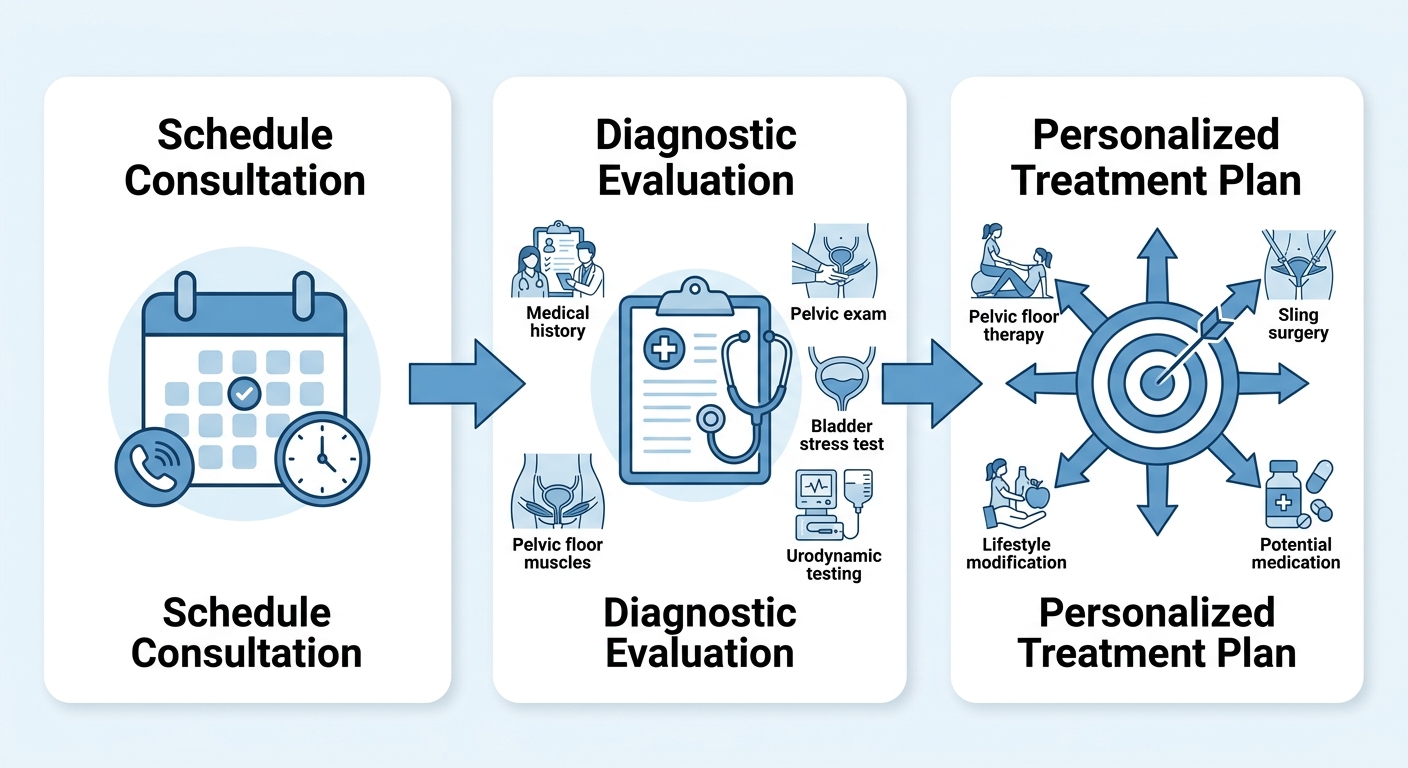
Now that you understand the types of urinary incontinence, here are practical steps you can take at home to regain control. If you are facing urinary incontinence in Fort Lauderdale, these evidence-based strategies form the foundation of effective, non-invasive treatment. At First Class OBGYN, we believe in empowering you with the tools and knowledge to improve your daily life.

Pelvic Floor Exercises: Mastering Kegels and Beyond

Identifying your pelvic floor muscles is the first step. The "stop the urine stream" test can help locate them, but avoid doing it regularly as it may lead to incomplete bladder emptying. Once located, proper Kegel technique involves tightening the muscles--as if holding back gas or urine--for 5 to 10 seconds, then relaxing fully for 10 seconds. Aim for 10 to 15 repetitions, three times daily. According to Mayo Clinic guidelines, consistency with Kegels is essential and can lead to noticeable improvement within a few weeks. For those who struggle with technique or need more intensive strengthening, advanced methods such as biofeedback and electrical stimulation offer higher effectiveness. The table below compares these approaches to help you choose the best starting point.

Pelvic Floor Exercise Methods Comparison
MethodDescriptionEffectivenessHow to Get Started
Kegels (Self-Guided)Voluntary contractions of pelvic floor musclesModerate if done correctly; high drop-off rateCount to 5 while tightening; release. 10 reps, 3x/day.
Biofeedback TherapyUses a sensor to show muscle activity in real timeHigh - learns correct technique quicklyVisit a pelvic floor physical therapist or provider with biofeedback equipment
Electrical StimulationMild electrical pulses to contract pelvic floor musclesHigh for urge incontinence; moderate for stressSupervised by a provider; can be done at home with a device
Pelvic Floor Physical TherapyOne-on-one sessions with a specially trained PTVery high - tailored to individual needsGet a referral or find a therapist who specializes in women's health

Bladder Training Techniques

Bladder training is a cornerstone of overactive bladder treatment and helps retrain your bladder to hold urine longer. Start by scheduling toilet trips every 2 to 3 hours, rather than waiting for an urge. Gradually extend the interval by 15-30 minutes each week. When urgency strikes, use suppression strategies:

  • Deep breathing: Slow, controlled breaths calm the bladder reflex.
  • Mental distraction: Focus on a task or count backward to shift attention.
  • Quick pelvic floor clenches: A series of rapid Kegels can dampen the urge.

Lifestyle Modifications to Reduce Leakage

Simple daily changes can dramatically reduce leakage severity. We recommend a comprehensive approach:

  • Diet: Limit caffeine to one cup per day and reduce acidic and spicy foods that can irritate the bladder. Avoid alcohol, which may increase urine production.
  • Fluid management: Spread fluid intake throughout the day; avoid drinking large amounts before bedtime.
  • Weight management: For those who are overweight, losing just 5-10% of body weight can lower urine leakage significantly.
  • Smoking cessation: Quitting reduces coughing and bladder irritation; seek cessation support through your provider.
  • Constipation relief: Treat constipation with a high-fiber diet and adequate fluids, as straining puts pressure on the pelvic floor.

Advanced Treatment Options and When to Seek Urogynecologic Care

If conservative measures have not provided adequate relief, advanced minimally invasive procedures may offer a more definitive solution. For residents in Fort Lauderdale experiencing urinary incontinence, understanding these options is an important step toward regaining confidence and comfort.

Minimally Invasive Procedures for Urinary Incontinence
ProcedureTarget ProblemRecoverySuccess Rate
Sling Surgery (e.g., mid-urethral sling)Stress incontinence2-4 weeks light activity; full recovery 6 weeks80-95% improvement in leakage
Sacral Neuromodulation (InterStim)Urge incontinence / overactive bladderDay procedure; 1-2 weeks post-op adjustment70-80% significant improvement
Botox Injections (into bladder muscle)Urge incontinence / overactive bladderMinimal; effect lasts 6-9 months50-70% reduction in urgency episodes
Laser Therapy (e.g., MonaLisa Touch)Vaginal atrophy, mild stress incontinenceNo downtime; 3 sessions recommended60-75% improvement in symptoms

Frequently Asked Questions About Urinary Incontinence

What treatment options for urinary incontinence are available in Fort Lauderdale?
Urinary incontinence is involuntary loss of urine, with stress, urge, and mixed as main types. We offer personalized care.

What causes stress incontinence?
According to the American College of Obstetricians and Gynecologists, stress incontinence occurs when pelvic floor muscles weaken. Stress incontinence treatment may involve pelvic floor exercises and minimally invasive procedures.

How is overactive bladder managed?
Overactive bladder (urge incontinence) causes sudden urges. We provide overactive bladder treatment including bladder training, pelvic floor therapy, and InterStim therapy.

Can urinary incontinence be treated without surgery?
Most cases improve without surgery through conservative care. We emphasize non-surgical approaches first, offering advanced minimally invasive options when needed.

Your Path to Better Bladder Health in Fort Lauderdale

If you're seeking relief from urinary incontinence in Fort Lauderdale, our practice provides a personalized path to lasting bladder control. We offer targeted treatments including stress incontinence treatment and overactive bladder treatment, with advanced options like InterStim therapy and Botox injections for the bladder. Our board-certified specialist provides expert and attentive care at every stage of a woman's life. Contact our Fort Lauderdale office to start your journey toward better bladder health.

Resources

Discover Urinary Incontinence Causes and Treatments for Women Learn about Urinary Incontinence Types, Causes, and Prevention Explore Urinary Incontinence Treatment Options and Guidelines Get Expert Bladder Control Guide for Urinary Incontinence Find Comprehensive Urinary Incontinence Diagnosis and Treatment Guide
Testimonials

Words from our patients

  • Google+

    "Dr. Anghel delivered my baby and I could have not been more happy with having him as my doctor. His staff is amazing and I highly recommend him to any expecting mom. "

    Crystal R.
  • Healthgrades

    "I consider him to be a highly skilled and knowledgeable OB/GYN doctor. He genuinely cares about his patients and I would highly recommend him."

    Catherine H.
  • Healthgrades

    "Dr. Laviniu did my recent surgery removing a cyst. He made me feel comfortable and was very informative."

    Catherine F.
  • Vitals

    "If you're looking for a highly skilled, warm and personable OB/GYN doctor, Dr. Anghel is the right doctor for you."

    Verified Patient
  • Vitals

    "Very professional and pleasant bed side manner. Dr Anghel addressed all my concerns and made me feel comfortable."

    Verified Patient
  • Vitals

    "Very professional and pleasant bed side manner. Dr Anghel addressed all my concerns and made me feel comfortable."

    Verified Patient
Our Locations

Choose your preferred location