


Table of Contents
Hormone Replacement Therapy in Pembroke Pines: A Comprehensive Guide
For many women, the transition through menopause brings uncomfortable symptoms like hot flashes, night sweats, and mood changes. Hormone replacement in Pembroke Pines can help restore balance and ease these daily challenges. At First Class OBGYN, we provide expert Hormone Therapy Pembroke Pines tailored to each woman's unique needs, guided by the latest clinical recommendations from the American College of Obstetricians and Gynecologists (ACOG).
We understand that every woman's experience is different, which is why we offer bioidentical hormone therapy as a natural option. Derived from plant sources, bioidentical hormones are chemically identical to those your body produces, offering effective menopause symptom relief without synthetic additives. For many women, HRT in Pembroke Pines becomes a comfortable and empowering solution. NIH research confirms that individualized treatment strategies lead to the best results, and we see this daily in our practice.
Your journey begins with a comprehensive initial consultation and evaluation with Dr. Laviniu Anghel, our board-certified gynecologist. We carefully review your health history, discuss your symptoms, and create a personalized treatment plan that may include follow-up and maintenance programs to track your progress and adjust therapy as needed.
Our Pembroke Pines clinic is a friendly, multilingual practice where you can feel at ease speaking English, Romanian, or Spanish. Committed to helping women restore their confidence, we are here for you every step of the way. In the following sections, we'll explore the different types of HRT available and how we tailor each plan to your needs.
Understanding Hormone Replacement Therapy for Menopause
At First Class OBGYN, we provide Expert Attentive Care for women navigating the challenges of menopause. Hormone replacement therapy (HRT) is one of the most effective treatments for relieving symptoms like hot flashes, night sweats, and vaginal dryness that disrupt daily life. For women seeking hormone replacement in Pembroke Pines, understanding the differences between bioidentical and traditional methods is crucial for making an informed decision that aligns with your health goals.
Hormone replacement therapy involves supplementing the body with estrogen, and sometimes progesterone, to counteract the natural decline during menopause. The two primary approaches--bioidentical hormone therapy and traditional hormone replacement therapy--differ in their source, molecular structure, and customization. Bioidentical hormones are derived from plant sources such as soy and yams, and they have a molecular structure identical to the hormones your body produces naturally. Because they are often compounded per patient at a specialized pharmacy, dosing can be precisely tailored to your hormone levels, which requires regular monitoring through blood or saliva tests. Traditional hormone therapy typically uses synthetic or animal-derived hormones that are not identical to human molecules, but they come in standardized doses with extensive research backing their safety and efficacy. Both approaches offer meaningful menopause symptom relief, but the choice depends on your personal health history, preferences, and how closely you want your treatment to mirror natural hormone patterns.
The table below summarizes the key distinctions between bioidentical and traditional hormone therapy.
| Aspect | Bioidentical Hormone Therapy | Traditional Hormone Replacement Therapy |
|---|---|---|
| Source | Plant-derived (soy, yam) | Synthetic or animal-derived |
| Molecular Structure | Identical to human hormones | Different from human hormones |
| Customization | Compounded per patient | Standard dosages |
| Monitoring | Regular blood/saliva tests | Less frequent monitoring |
| Safety Profile | Limited long-term data; generally considered safe | Extensive studies; risk/benefit well-documented |
| FDA Approval | Some compounded forms not FDA-approved | Many formulations FDA-approved |
The table above highlights the contrast between these two approaches. According to the American College of Obstetricians and Gynecologists (ACOG), hormone therapy can provide significant benefits when it is individualized and carefully monitored. While traditional options have the weight of large-scale studies, bioidentical preparations allow for a more personalized approach that many women prefer. Partnering with a knowledgeable provider helps you weigh these factors in light of your own health priorities.
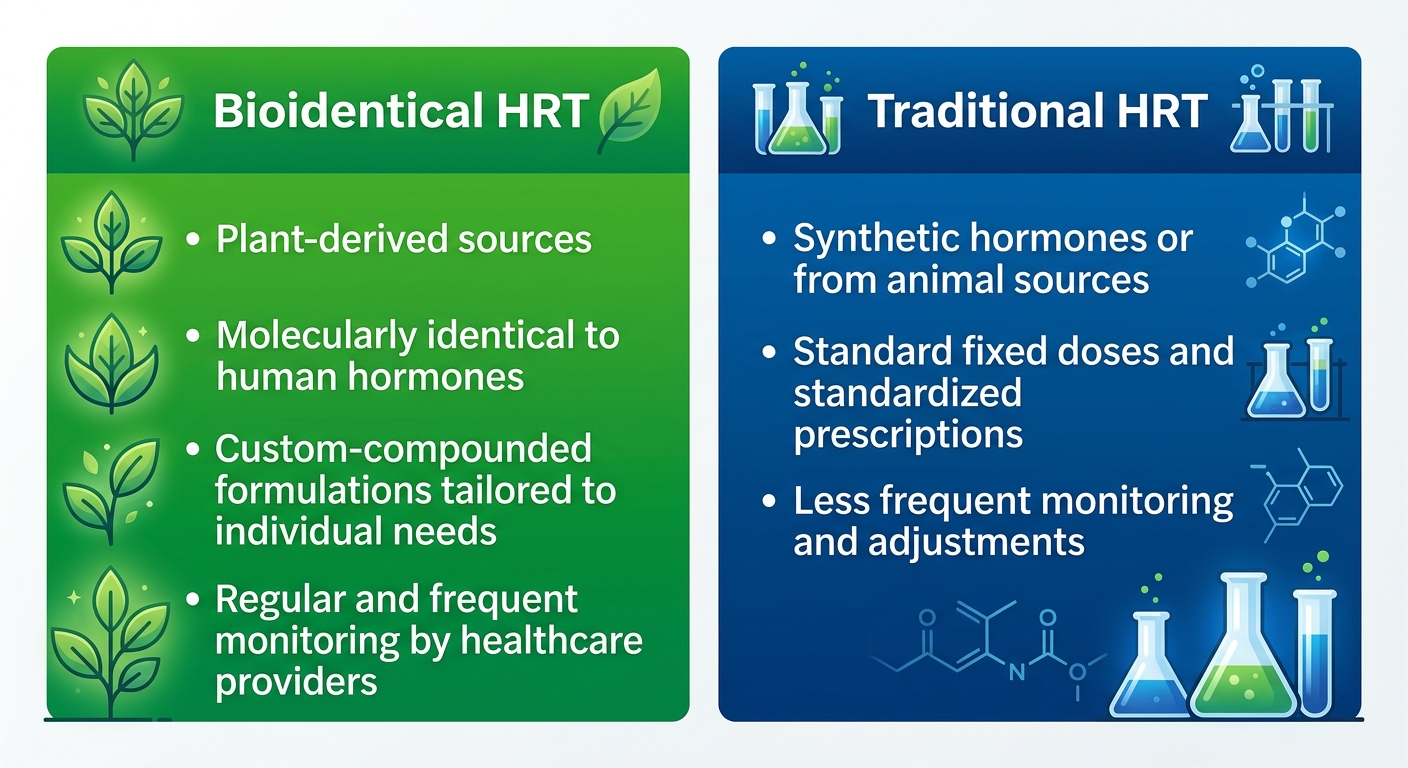
Visual comparison of two hormone therapy approaches for menopause management.
At First Class OBGYN, we follow ACOG's guidance by offering comprehensive consultations that review your symptom profile, medical history, and treatment preferences. We tailor hormone replacement therapy to your unique needs, whether you choose bioidentical or traditional options. Our goal is menopause symptom relief that fits your life, supported by expert monitoring and open communication throughout your journey.
Individual treatment outcomes depend on patient factors and clinical circumstances. Now that you understand the types of HRT, schedule a consultation at our Pembroke Pines office. If you are exploring options for hormone replacement in Pembroke Pines, our team provides Hormone Replacement Therapy Pembroke Pines with personalized, expert care.
The Science and Safety of Hormone Replacement Therapy
Many women approaching menopause ask the same two questions: How does hormone replacement therapy actually work, and is it safe? If you are exploring hormone replacement in Pembroke Pines, it is important to have clear, science-based answers. Our team at First Class OBGYN believes that knowledge is the foundation of confident healthcare decisions. We combine evidence-based guidance with the attentive, personalized support you deserve.
How Hormone Levels Affect Your Body
During perimenopause, estrogen production can fall by 40 to 60 percent, and progesterone drops even more sharply. Testosterone also declines gradually. These changes disrupt the hypothalamic-pituitary-ovarian axis--the body's hormonal command center--triggering the hallmark symptoms of menopause: hot flashes, night sweats, mood swings, and vaginal dryness. For those navigating menopause Pembroke Pines, understanding this hormonal shift is the first step toward relief.
Hormone replacement therapy works by supplementing estrogen, progesterone, and sometimes testosterone to bring levels closer to premenopausal ranges. Restoring that balance can dramatically reduce hot flashes, stabilize mood, and improve sleep and vaginal comfort. We know that menopause symptom relief is a top priority, and we are here to help you find the right approach.
Bioidentical Hormones vs Synthetic: A Closer Look
Bioidentical hormones--such as estradiol, progesterone, and testosterone--are chemically identical to the hormones your body produces naturally. They are plant-derived and fit your hormone receptors like a key fitting a lock. In contrast, synthetic hormones like conjugated equine estrogens and medroxyprogesterone acetate have a different molecular structure, which can influence how they are processed in the body.
For example, oral synthetic estrogens undergo first-pass liver metabolism, which may increase clotting factors, while bioidentical hormones delivered through the skin (transdermal) enter the bloodstream directly and avoid that first-pass effect. Some studies suggest that these differences in receptor binding and metabolism may lead to varying risk profiles, though research continues. When discussing bioidentical hormone therapy, it is important to know that the term can refer to both customized compounded preparations and FDA-approved products, and not all are the same.
At First Class OBGYN, we focus on evidence-based options and will help you understand which formulation aligns with your health history and goals. We believe that open, clear communication is essential--we offer a wonderful blending of friendly and professional care that makes these conversations comfortable.
Safety and Side Effects of Long-Term Use
For many women, the greatest concern about hormone replacement therapy is long-term safety. According to the American College of Obstetricians and Gynecologists, combined estrogen-progestin therapy used for more than five years is associated with a small increase in breast cancer risk, though the absolute increase remains modest. Research from the National Institutes of Health further indicates that the risk of blood clots and stroke can be higher with oral formulations due to liver metabolism, whereas transdermal estrogens appear to carry a lower thrombotic risk. Smoking, BMI, and age also influence individual risk, which is why a thorough evaluation is essential.
At First Class OBGYN, hormone replacement therapy in Pembroke Pines is carefully tailored to your personal health profile, taking into account your symptoms, preferences, and medical history. We are here for you with evidence-based care and continuous monitoring.
Results may vary based on individual patient conditions and circumstances. Please consult a healthcare professional for personalised medical advice and diagnosis.
The delivery method you choose also influences safety and convenience. The table below compares the most common hormone therapy options.
| Delivery Method | Pros | Cons | Typical Dosing |
|---|---|---|---|
| Oral tablets | Convenient, familiar | First-pass liver metabolism, daily dosing, may cause GI issues | Daily |
| Transdermal patches | Steady hormone levels, avoids liver metabolism, low risk of blood clots | Skin irritation, may not adhere well, potential for patch falling off | 1-2 times per week |
| Topical creams/gels | Flexible dosing, easily adjustable, non-invasive | Risk of transfer to others, variable absorption, need to avoid skin contact for a period after application | Daily |
| Pellets | Long-lasting (3-6 months), no daily care, consistent hormone levels | Requires insertion procedure, cannot be quickly adjusted, potential for infection, may need removal if levels become too high | Every 3-6 months |
Understanding the differences between delivery methods can help you have a more informed conversation with your provider. More women are discovering that HRT for menopause can be a safe, effective option when guided by a knowledgeable team. At First Class OBGYN, we are committed to helping women restore their confidence through personalized hormone therapy that suits your lifestyle and health needs. Our approach--Expert Attentive Care--means we take the time to listen, educate, and walk with you every step of the way.
Your Journey to Hormonal Balance: From Consultation to Ongoing Care
Now that you understand how hormone therapy can restore your quality of life, let's walk through your personalized journey at First Class OBGYN. Whether you're considering hormone replacement pembroke pines or seeking hormone replacement therapy Fort Lauderdale FL, our team provides the same comprehensive, patient-centered care at every South Florida location.
Determining Candidacy and Initial Evaluation
If you're experiencing moderate-to-severe vasomotor symptoms like frequent hot flashes, disruptive night sweats, or persistent sleep disturbances, you may be a candidate for hormone replacement. Genitourinary symptoms such as vaginal dryness or pain during intercourse are also strong indicators that hormone support could bring relief. According to ACOG, the evaluation process should begin with a thorough review of your personal and family medical history--especially any history of breast cancer, clotting disorders, heart disease, or unexplained vaginal bleeding--as these may signal contraindications. We assess your symptom load using a validated menopausal symptom scale and perform a physical exam when indicated. Lab work typically includes FSH, estradiol, TSH, a metabolic panel, and sometimes vitamin D testing. We often recommend bioidentical hormone therapy for women whose symptom pattern and health history align with this option, always tailoring the approach to each patient's unique needs.
What to Expect During Your First Visit in Pembroke Pines
When you arrive at our Pembroke Pines office, you'll be greeted by friendly staff who help you feel at ease immediately--a wonderful blending of friendly and professional. Dr. Anghel (who speaks English, Romanian, and Spanish) will spend 45-60 minutes with you, discussing your symptoms, health goals, and any concerns. You can expect a comprehensive blood draw and, after a shared discussion, the creation of a personalized treatment plan that includes the most suitable type of hormone therapy, route of administration, and starting dosage. We review lab results together at your follow-up or through our secure patient portal, so you never feel rushed. Throughout, we are committed to helping women restore their confidence through clear communication and attentive clinical care.
To help you visualize the road ahead, the following table contrasts your initial consultation with routine follow-up visits.
| Aspect | Initial Consultation | Follow-Up Visits |
|---|---|---|
| Duration | 45-60 minutes | 15-30 minutes |
| What happens | Medical history, symptom review, physical exam, lab orders | Review symptoms, blood test results, adjust dosing, side effect check |
| Tests performed | Comprehensive blood panel (hormones, thyroid, metabolic), possibly saliva test | Repeat hormone level measurement, additional labs as needed |
| Insurance coverage | Typically covered; verifiy beforehand | Usually covered; may require pre-authorization for certain tests |
| Outcome | Personalized treatment plan, start HRT if appropriate | Treatment optimized, next monitoring date set |
ACOG recommends follow-up every 3-6 months initially; once your hormone levels stabilize and you reach your therapeutic goals, we transition to annual visits. This evidence-based rhythm ensures that any needed adjustments are identified early and that your plan keeps pace with your body's changing needs.
Monitoring, Follow-Up, and Adjusting Your Treatment Plan
After your first follow-up at three months, we schedule check-ins every six months and then annually when your response is steady. We are here for you at every step, whether you visit in person or, for stable patients, use a convenient telemedicine call. At each follow-up, we review your symptom journal, recheck hormone levels (such as estradiol and testosterone if applicable), and screen for any side effects. Based on these findings, Dr. Anghel may fine-tune your dosage or switch the delivery method to maintain optimal menopause symptom relief over time. Insurance typically covers routine follow-ups, though pre-authorization may be needed for certain lab panels; our staff helps you navigate that process. By staying closely connected, we ensure that your treatment plan evolves as your life does--always aimed at sustained well-being.
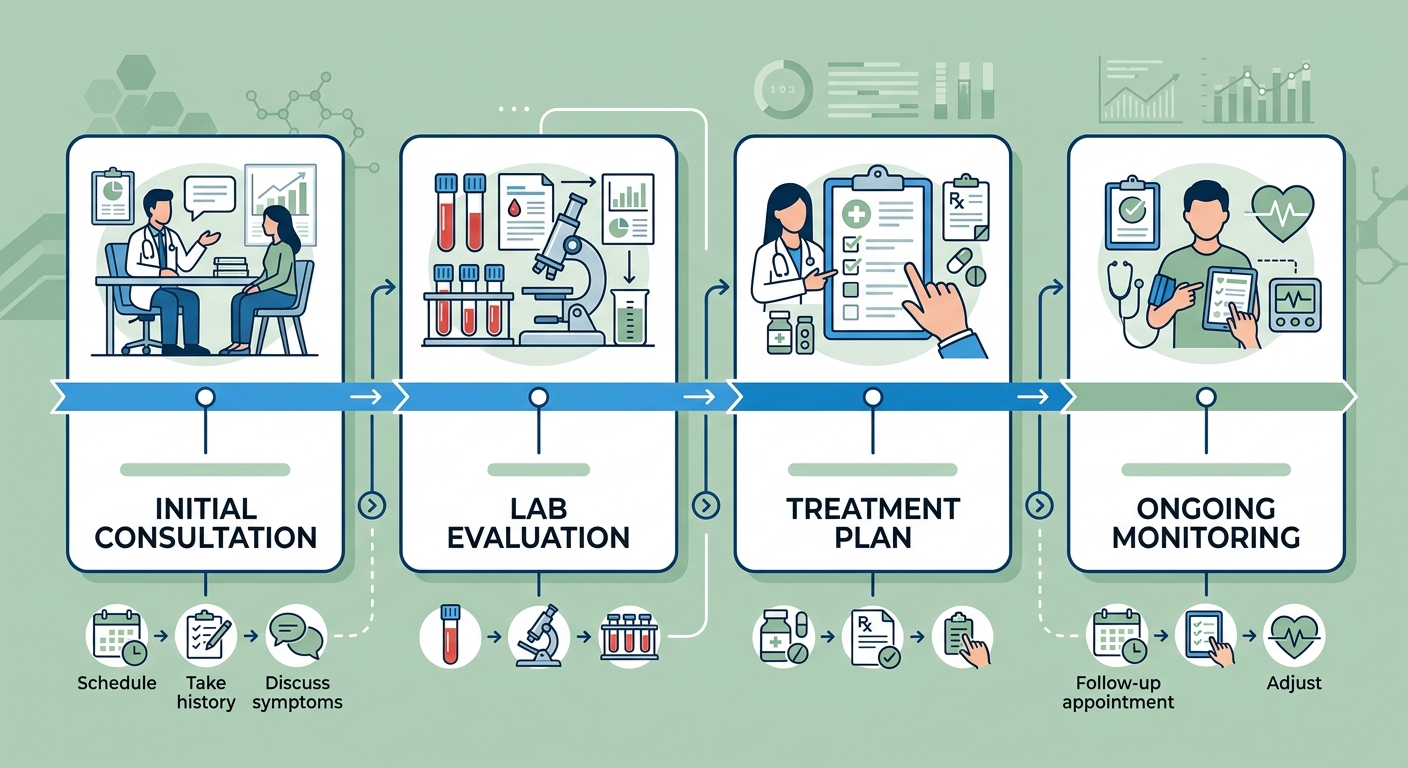
Your journey to hormonal balance visualized
Once your treatment is stable, regular follow-ups and thoughtful adjustments keep you feeling like yourself. Ready to begin? Contact our Pembroke Pines office to schedule your consultation and take the first step toward confidence and comfort.
Advanced Considerations: Long-Term Management and Hormonal Health
While short-term hormone replacement therapy (HRT) effectively addresses menopausal symptoms for many women, long-term use requires careful consideration of the latest evidence. Patients considering hormone replacement in Pembroke Pines need a clear understanding of the landmark safety studies that shape our approach to ongoing management. We believe that informed patients make the best decisions about their hormonal health.
According to the National Institutes of Health, the Women's Health Initiative (WHI) revealed that combined estrogen-progestin therapy increases the risk of breast cancer, heart disease, stroke, and blood clots, whereas estrogen-only therapy presented a different risk profile. We embrace the WHI recommendation to use the lowest effective dose for the shortest duration and to consider non-oral routes to reduce thrombotic risk. This evidence underscores the necessity of individualized risk-benefit analysis.
The American College of Obstetricians and Gynecologists (ACOG) maintains that HRT remains effective for moderate to severe vasomotor symptoms. For women exploring hormone replacement in Pembroke Pines, ACOG guidelines affirm that HRT can provide meaningful menopause symptom relief when benefits are balanced against risks for healthy women under 60 or within 10 years of menopause onset. We therefore tailor treatment based on symptom severity, patient age, and overall health history.
The National Institutes of Health also cautions that bioidentical hormone therapy may carry risks comparable to traditional HRT, and long-term studies remain limited. Compounded bioidentical preparations lack the rigorous FDA oversight of approved products, so we recommend FDA-approved formulations whenever possible and close monitoring for any adverse effects.
The table below summarizes the major research findings and recommendations.
| Study/Organization | Key Findings | Recommendations |
|---|---|---|
| Women's Health Initiative (WHI) | Increased risk of breast cancer, heart disease, stroke, and blood clots with combined estrogen-progestin therapy; estrogen-only had different risk profile | Use lowest effective dose for shortest duration; consider non-oral routes for lower risk |
| ACOG | HRT remains effective for moderate to severe vasomotor symptoms; benefits often outweigh risks for healthy women under 60 or within 10 years of menopause onset | Individualize treatment based on symptom severity, patient age, health history, and preferences |
| NIH Research (Bioidentical Hormones) | Limited long-term studies; bioidentical hormones may have similar risks to traditional HRT; compounded bioidenticals lack FDA oversight | Use FDA-approved bioidentical preparations when possible; monitor closely for adverse effects |
We provide individualized hormone therapy plans at our South Florida locations, including in Miramar, Weston, and Pembroke Pines, offering hormone therapy Fort Lauderdale with Expert Attentive Care. Because long-term management requires careful monitoring, we encourage a thorough consultation. Results may vary based on individual patient conditions and circumstances. Please consult a healthcare professional for personalised medical advice and diagnosis.
Frequently Asked Questions About Hormone Replacement Therapy
What is hormone replacement therapy in Pembroke Pines? HRT replenishes hormones to relieve menopause symptoms. According to ACOG, it's the most effective treatment for hot flashes and vaginal dryness. Our Pembroke Pines clinic follows these standards.
What are the benefits and risks? Benefits include menopause symptom relief and better sleep. Per NIH, long-term use may raise breast cancer and clot risks. We follow ACOG safety guidelines.
Who is a candidate? Women with menopausal symptoms may benefit. Based on ACOG criteria, we discuss bioidentical hormone therapy options for personalized care.
Where can I get hormone therapy in Pembroke Pines? We offer hormone therapy Pembroke Pines patients trust, with personalized care backed by ACOG guidelines. We are here for you. Results may vary based on individual patient conditions and circumstances.
Take the Next Step Toward Hormonal Balance in Pembroke Pines
If you're considering hormone replacement in Pembroke Pines, we're here to guide you. Our team provides personalized care using bioidentical hormone therapy, which may support menopause symptom relief and help you regain hormonal balance. We offer initial consultations and follow-up programs tailored to your needs, ensuring you receive expert attentive care every step of the way. Contact First Class OBGYN today to schedule your initial consultation and take the first step toward feeling like yourself again. Results may vary; please consult a healthcare professional for personalized medical advice.


