
Pelvic Floor Therapy Fort Lauderdale: Complete Recovery Guide

Table of Contents
- Pelvic Floor Therapy in Fort Lauderdale: A Complete Resource
- Understanding Pelvic Floor Therapy Fundamentals
- How Pelvic Floor Therapy Works: Conditions, Techniques, and Evidence
- Preparing for Your First Pelvic Floor Therapy Appointment in Fort Lauderdale
- Beyond Basics: Advanced Options for Pelvic Floor Health
- Frequently Asked Questions About Pelvic Floor Therapy
- Embark on Your Pelvic Floor Health Journey
Pelvic Floor Therapy in Fort Lauderdale: A Complete Resource
Beyond routine gynecology, we specialize in therapies that address underlying pelvic health issues, offering effective pelvic floor therapy in Fort Lauderdale for women who need relief from discomfort or dysfunction. At First Class OBGYN, our pelvic floor rehabilitation program combines pelvic muscle training, biofeedback therapy, and individually tailored exercise plans to help strengthen or relax the pelvic floor muscles. This approach reflects our philosophy of a wonderful blending of friendly and professional care, so you feel informed and supported at every visit.
Pelvic floor therapy is recommended by the National Institutes of Health for managing pelvic organ prolapse and urinary incontinence. The American College of Obstetricians and Gynecologists also endorses pelvic floor muscle training as a first-line intervention, and these techniques can effectively restore comfort and confidence. For new mothers, pelvic floor therapy plays a vital role in postpartum recovery—and we also offer a dedicated postpartum fitness program online to support your journey. Results may vary based on individual patient conditions and circumstances.
Our urogynecological services bring expert pelvic floor therapy in Fort Lauderdale within easy reach for women in Miramar, Weston, Pembroke Pines, and across South Florida. We are committed to helping women restore their confidence through personalized, evidence-based care. To get started, schedule a consultation today. In the following sections, we explore the specific therapies we offer and what you can expect during your visit.
Understanding Pelvic Floor Therapy Fundamentals
Pelvic floor therapy is a specialized rehabilitation program that strengthens the group of muscles supporting your bladder, uterus, and rectum. At First Class OBGYN, we provide pelvic floor therapy in Fort Lauderdale to help women recover from childbirth, manage urinary incontinence, and ease pelvic pressure. It’s a gentle, non-invasive way to rebuild your core from the inside out.
Think of your pelvic floor as a hammock of muscles that stretches from the pubic bone to the tailbone. These muscles are key to bladder control, bowel function, sexual health, and core stability. During pregnancy and childbirth, or as part of the natural aging process, these tissues can stretch and weaken. When the pelvic floor loses strength or coordination, everyday moments—like sneezing, lifting, or exercising—can become uncomfortable or unpredictable.
Many women seek pelvic floor therapy for specific concerns. Urinary incontinence—leaking when you laugh, cough, or exercise—is a common challenge. Pelvic organ prolapse, which may feel like pressure or bulging, also responds well to targeted exercises. If you notice any of these symptoms, or persistent pelvic pain or bowel difficulties, a personalized therapy plan may help. Our Expert Attentive Care ensures each plan is tailored to your body’s needs. We offer pelvic floor therapy in Fort Lauderdale that treats the root cause of these symptoms, helping you regain confidence.
The cornerstone of pelvic floor therapy is the Kegel exercise—a gentle squeeze-and-release of the pelvic muscles. When done correctly, Kegels may improve muscle tone and reduce leakage, but many women need guidance to engage the right muscles. We teach Kegels alongside diaphragmatic breathing, a deep belly breath that encourages relaxation and better muscle coordination. Biofeedback tools can also be used to show you real-time muscle activity, ensuring every repetition counts. This non-invasive therapy can be performed during clinic visits or at home as part of a comprehensive care plan.
For women who have recently given birth, pelvic floor assessment is often recommended before returning to any structured exercise. As we outline in our postpartum fitness resources, waiting for your postpartum checkup—typically four to six weeks after a vaginal birth and six to eight weeks after a cesarean—is crucial, though gentle pelvic floor work may begin earlier with medical clearance. Many women find that learning these fundamental skills prepares them for our postpartum fitness program online, which integrates Kegels, breathing, and safe core work into a structured recovery plan. You can also explore our postpartum fitness program online for guidance on progressions and modifications that support safe return to activity. Whether you are just starting your journey or ready to rebuild your strength, we are here for you with compassionate, evidence-based care. We are committed to helping women restore their confidence, one mindful movement at a time. Individual treatment outcomes depend on patient factors and clinical circumstances.
How Pelvic Floor Therapy Works: Conditions, Techniques, and Evidence
Now that we understand what pelvic floor therapy is, let’s look at how it works for common conditions, the techniques used, and the evidence behind it. For patients seeking pelvic floor therapy in the Fort Lauderdale area, this comprehensive overview explains the conditions we treat and the results you can expect.
Common Conditions Treated with Pelvic Floor Therapy
We see these conditions frequently among women in South Florida, and our targeted therapy programs have helped many achieve lasting relief. Pelvic floor therapy effectively treats three common concerns: urinary incontinence, pelvic organ prolapse, and postpartum dysfunction. The table below highlights how therapy targets each issue.
| Condition | Symptoms | Therapy Focus | Expected Progress |
|---|---|---|---|
| Urinary Incontinence | Leakage during cough/sneeze, urgency, frequent urination | Strengthen pelvic floor muscles, improve bladder control | Improvement often noticed within 4-6 weeks of consistent therapy |
| Pelvic Organ Prolapse | Bulge sensation, pelvic pressure, discomfort during activity | Supportive exercises, biofeedback, possible use of pessary | Gradual improvement over 3-6 months; may require combined approaches |
| Postpartum Recovery | Weakness, diastasis recti, incontinence after childbirth | Gentle strengthening, core engagement, scar tissue management | Significant gains in 8-12 weeks with consistent program |
Each condition responds well to targeted therapy, but timelines vary based on severity and consistency. ACOG guidelines recommend pelvic floor therapy as first-line treatment for urinary incontinence, and studies from the National Institutes of Health show 70–80% of patients report improvement for pelvic organ prolapse. By focusing on muscle retraining and support, therapy addresses the underlying dysfunction rather than just symptoms. Our Miramar clinic combines these insights with personalized care to optimize outcomes.
Understanding these conditions sets the foundation for choosing the right techniques. At First Class OBGYN, we use evidence-based methods to address the root causes.
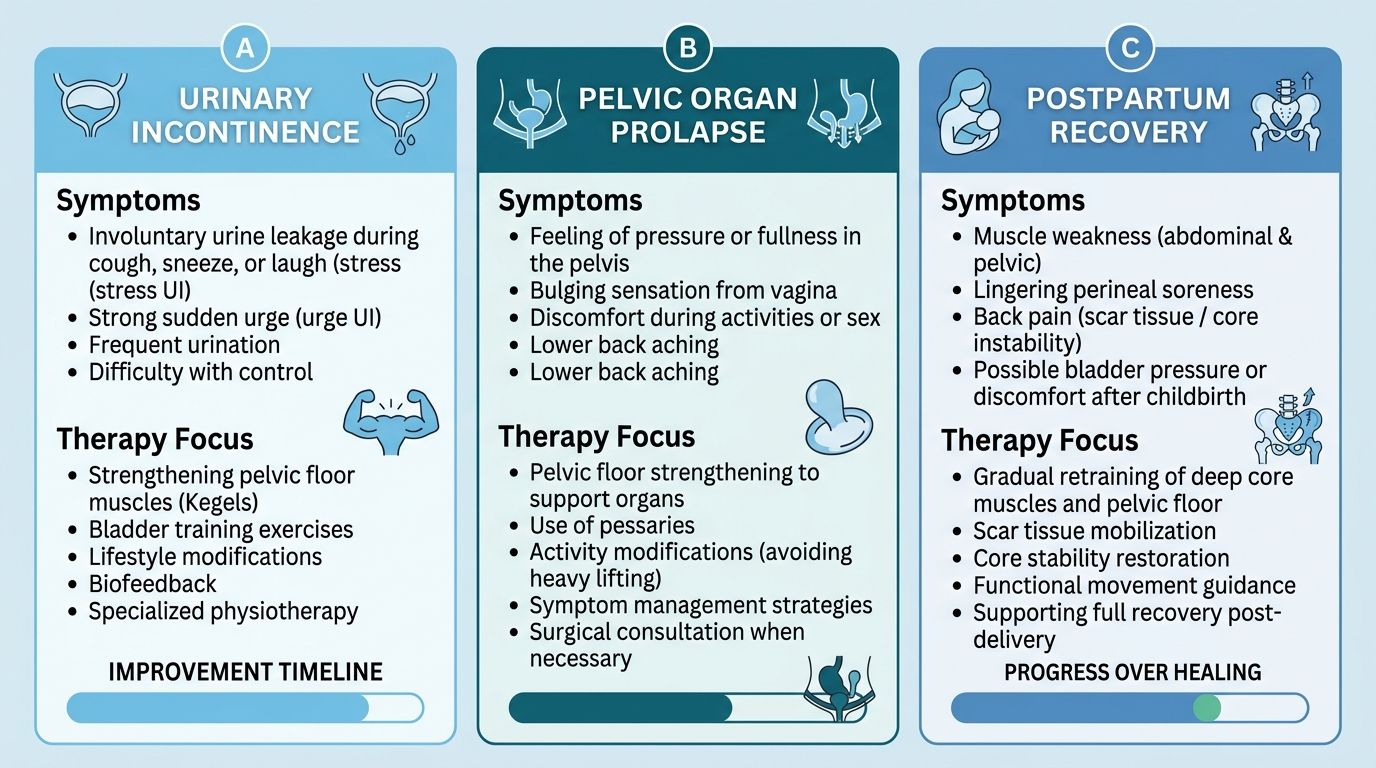
Comparison of three pelvic floor conditions with therapy focus areas.
Key Techniques Used in Pelvic Floor Therapy
We use several evidence-based techniques to address pelvic floor dysfunction, each targeting specific conditions. Manual therapy involves hands-on techniques that release tight muscles, improve tissue mobility, and break down scar tissue, making it especially useful for postpartum recovery and pelvic organ prolapse. Biofeedback uses sensors to measure muscle activity and displays it on a screen, helping you visualize and learn proper coordination—critical for pelvic organ prolapse and urinary incontinence where muscle timing is impaired. Electrical stimulation delivers gentle, controlled impulses to stimulate weak muscles, often used for stress urinary incontinence when voluntary contractions are difficult. Therapeutic exercises, such as Kegels and core stabilization, build overall pelvic floor strength and endurance for all three conditions. We combine these techniques based on your unique needs, and our team is committed to helping women restore their confidence through supportive, personalized care. For instance, a patient with urinary incontinence may start with electrical stimulation and biofeedback, then progress to exercises, while someone with pelvic organ prolapse might focus on manual therapy and biofeedback to relearn muscle coordination. We are here for you, offering Expert Attentive Care in a friendly, professional setting.
Evidence and Outcomes: What Research Supports
Research strongly supports pelvic floor therapy as a first-line treatment. The American College of Obstetricians and Gynecologists (ACOG) recommends it for urinary incontinence, and studies from the National Institutes of Health show 70–80% of patients report significant improvement for pelvic organ prolapse. For postpartum recovery, the CDC endorses gentle pelvic floor exercises as safe and effective when started at appropriate intervals. In our own practice, patients in the Fort Lauderdale area who undergo pelvic floor therapy at our Miramar clinic typically notice improvement within 4–6 weeks. These outcomes are encouraging, though results may vary based on individual patient conditions and circumstances. At First Class OBGYN, we are committed to helping women restore their confidence with Expert Attentive Care throughout your therapy journey. We combine the latest research with compassionate guidance, so you feel supported at every stage. With a clear understanding of how pelvic floor therapy works, you may be wondering what a typical treatment plan looks like at our Miramar clinic.
Preparing for Your First Pelvic Floor Therapy Appointment in Fort Lauderdale
Deciding to explore pelvic floor therapy in Fort Lauderdale is a courageous step. Committed to helping women restore their confidence, we offer Expert Attentive Care and are here for you.
What to Expect During Your Initial Evaluation
From the moment you arrive, your therapist prioritizes comfort and clear communication. Your initial evaluation begins with a detailed health history—covering pregnancies, childbirth, prior surgeries, and specific symptoms like urinary incontinence or pelvic organ prolapse. We’ll ask about your lifestyle, fitness routines, and personal goals, whether you want to return to running or simply end leakage. We will also review any prior treatment attempts and explain how pelvic floor therapy techniques can address your concerns without surgery.
The physical assessment includes gentle external palpation and biofeedback surface EMG to evaluate muscle function. If needed, an internal vaginal exam may be performed to assess muscle tone and tender points—it is completely optional and can be paused or stopped at any time. We take a trauma-informed approach, ensuring you feel respected and in control.
Wear comfortable clothing and bring a list of current medications and any prior imaging reports if available. Avoid a heavy meal or a full bladder right before your visit. The full evaluation typically lasts 60–90 minutes, giving us ample time to listen and lay the groundwork for your care.
Designing Your Personalized Therapy Plan
After the evaluation, we design a personalized therapy plan that typically blends 1–2 office sessions weekly with 10–20 minutes of daily home exercises. Research from the CDC public health and NIH confirms that this combination approach delivers the most lasting results.
The following table compares the three common therapy settings we discuss together. This overview can help you decide which structure aligns with your needs and schedule.
| Setting | Frequency | Supervision Level | Typical Cost Range | Best For |
|---|---|---|---|---|
| In-Office Sessions | 1-2 times per week | Direct therapist guidance | $75–$150 per session | Initial conditioning, complex cases |
| At-Home Program | Daily, 10-20 minutes | Self-directed | Minimal | Consistent maintenance, flexibility |
| Combination Approach | Weekly office + daily home | Mixed | Moderate | Optimal progress, consistency |
Setting Yourself Up for Success: Tips and Best Practices
- Wear comfortable clothing so you can move easily and feel at ease.
- Bring a list of current medications and any prior imaging reports to help us tailor your care.
- Avoid a heavy meal or a full bladder right before your appointment—a light snack is fine.
- Speak up about any pain, discomfort, or changes in your symptoms; small adjustments can make a big difference.
- Practice your home exercises daily—just 10–20 minutes of focused work reinforces the progress made in the office.
- Track your symptoms in a simple journal; noting patterns helps us refine your plan.
We are here to support you through every stage of recovery. Once your plan is in place, the next step is building consistency—covered later in this guide. Please remember that results may vary based on individual patient conditions and circumstances.
Beyond Basics: Advanced Options for Pelvic Floor Health
For women who require more than Kegels alone, advanced options are available. If you are seeking pelvic floor therapy in the Fort Lauderdale area, we offer a range of non-surgical and surgical treatments designed to address conditions that basic exercises may not fully resolve. Our approach moves beyond maintenance to active restoration, helping you regain comfort and confidence.
Laser vaginal rejuvenation is a non-surgical, minimally invasive option that can help improve mild pelvic organ prolapse by encouraging collagen renewal and tissue tightening. Similarly, radiofrequency treatments use gentle energy to stimulate deep supportive tissues, which may be appropriate for reducing stress urinary incontinence and restoring pelvic floor tone. Both procedures are performed in-office with little downtime, and they represent the next step for women whose concerns extend beyond what exercises alone can achieve.
When structural correction is needed, surgical options such as vaginoplasty and labiaplasty provide more definitive support. These are discussed on a case-by-case basis during a thorough consultation where we review your health history, goals, and the potential benefits of each approach. We always take time to explain what to expect and to ensure you feel fully informed before making any decision.
For new mothers, a structured recovery plan can be essential. Our comprehensive postpartum fitness program online guides you through safe, progressive exercises that focus on pelvic floor rebuilding, core stabilization, and gradual strength training. This program is an advanced, guided option that complements in-office treatments and supports lasting results at your own pace.
Every advanced treatment plan begins with a personal conversation at one of our South Florida locations—Miramar, Weston, and Pembroke Pines. During your initial consultation we tailor a roadmap to your needs and share transparent pricing so there are no surprises. Committed to helping women restore their confidence, we invite you to take the next step. We are here for you. Schedule a consultation to explore which advanced option fits your needs.
Frequently Asked Questions About Pelvic Floor Therapy
We often hear questions about pelvic floor therapy in Fort Lauderdale. Here are quick answers to common concerns.
What is pelvic floor therapy and how does it work? Pelvic floor therapy uses non-surgical methods such as biofeedback, Kegel exercises, and electrical stimulation to strengthen pelvic floor muscles and improve function.
What conditions does pelvic floor therapy treat? It helps improve pelvic organ prolapse and urinary incontinence by restoring support. The American College of Obstetricians and Gynecologists recommends this therapy as a first-line conservative treatment.
Is pelvic floor therapy the same as vaginal rejuvenation? No. Pelvic floor therapy strengthens muscles through exercise, while vaginal rejuvenation uses tissue-tightening procedures to improve tone.
Does insurance cover pelvic floor therapy? Yes, when medically indicated for pelvic organ prolapse or urinary incontinence, most insurance plans cover therapy. We offer transparent pricing and can verify coverage.
Results may vary based on individual patient conditions and circumstances.
Embark on Your Pelvic Floor Health Journey
Welcome! We're glad you've found First Class OBGYN. Seeking pelvic floor therapy in Fort Lauderdale marks a powerful step toward comfort and confidence. Your pelvic floor is a group of muscles that support the bladder, uterus, and bowel, essential for bladder control. When they weaken, urinary incontinence or pelvic organ prolapse may develop. Our team specializes in pelvic floor rehabilitation with Expert Attentive Care tailored to your needs. We are here for you, committed to helping women restore their confidence. Discover how we can support your pelvic health journey.
Resources
- Discover Postpartum Fitness Program Start Times
- Learn Safe Exercises for Postpartum Fitness Program
- Explore Complete Guide to Postpartum Fitness Program
- Compare Surgical and Non-Surgical Vaginal Rejuvenation
- Learn Non-Surgical Vaginal Rejuvenation Cost Info
- Understand the Basics of Vaginal Rejuvenation
- Explore Non-Surgical Cosmetics in Channelside Florida
- Access National Institutes of Health Research Resources
- Explore ACOG Resources for Women's Health
- Access CDC Public Health Data and Resources