
Hormonal Acne Treatment: Complete Guide for Clear Skin

Table of Contents
- Understanding Hormonal Acne Treatment
- What Is Hormonal Acne?
- How Hormonal Acne Develops and Why It Flares
- Effective Treatments for Hormonal Acne
- When to See a Specialist for Hormonal Acne
- Frequently Asked Questions About Hormonal Acne
- Taking Control of Your Hormonal Health
Understanding Hormonal Acne Treatment
Hormonal acne is a common skin condition triggered by fluctuations in androgens—hormones that can overstimulate the sebaceous glands. This often leads to breakouts concentrated along the jawline and chin, particularly in adult women. At First Class OBGYN, we understand how frustrating persistent acne can be, and we provide effective hormonal acne treatment options designed to address the underlying hormonal causes rather than just the surface symptoms.
As part of our comprehensive care, we typically approach treatment for hormonal acne with prescription therapies that regulate or block androgen activity. The two most common medical treatments we offer are oral contraceptives and spironolactone. Combined birth control pills that contain both estrogen and progestin can help by reducing the ovaries' production of androgens, which in turn lowers sebum production and helps keep pores clear. Similarly, spironolactone is an anti-androgen medication that directly blocks androgen receptors in the skin, decreasing oil production and preventing breakouts at their source.
We can not determine what hormonal acne treatment will work for an individual because every woman has different body chemistries. Every woman has different body chemistries, and therefore, we must get a medical history, conduct an evaluation for diagnostic testing for your specific hormone levels, and assess your other symptoms. After the consultation, we can determine whether an acne birth control, an acne treatment with spironolactone, or a mixture of the two, would be best of for you, as results do differ with each patient.
We are committed to helping women restore their confidence with Expert Attentive Care. If you are ready to explore a personalized approach to clearer skin, we encourage you to schedule an appointment with our gynecologist women health services team. Together, we can develop a treatment plan that aligns with your health needs and goals.
What Is Hormonal Acne?
Hormonal acne is one of the most common skin concerns we address at First Class OBGYN. According to the American Academy of Dermatology, it is a distinct subtype of acne vulgaris characterized by deep, tender cysts that tend to cluster along the jawline, chin, and lower face. Unlike the surface-level whiteheads or blackheads of comedonal acne, these breakouts are driven by internal hormonal shifts, making them more resistant to typical skincare alone. Recognizing the signs of hormonal acne early can help guide you toward the right care.
The development of hormonal acne is primarily due to changes with your androgens (testosterone included) and how they interact with sebaceous glands. These hormonal changes stimulate sebaceous glands, resulting in excess sebum (an oily substance that can clog pores). The combination of excess sebum, dead skin cells, and the bacteria Cutibacterium acnes, result in an ideal environment for inflammation. This leads to the development of painful, deep cysts that are characteristic of hormonal acne. In particular women, this cycle can worsen during the days leading up to their period or during the perimenopause phase, setting it apart from other types of acne.
Although most hormonal acne is seen in women aged 20-40 it can also appear in puberty, pregnancy, and even after giving birth. This is because the body is going through different hormonal changes and fluctuations. Each time there is a rise in androgens, the skin will react and breakout, especially in the case of hormonal acne. That is the reason why we have so many patients who go to dermatology and also to gynecology, which is the medical field that deals with these hormonal issues.
At First Class OBGYN, we view hormonal acne through the lens of comprehensive women’s health. Because the root cause lies in hormonal regulation, our expertise in this area—backed by Dr. Anghel’s board certifications in both the United States and the European Union—allows us to offer a holistic approach. We combine thorough hormonal assessment with individualized diagnostic evaluation to address each patient’s unique endocrine profile and skin response in practice. Addressing the underlying imbalance often leads to improvements that go beyond clear skin, helping women restore their confidence. This is why we emphasize the value of a dedicated gynecology practice patient care philosophy in managing hormone-driven skin conditions. Understanding what sets off hormonal acne is the first step toward managing it, which we explore next.
How Hormonal Acne Develops and Why It Flares
Hormonal acne happens when changes in your body’s reproductive system cause the skin to produce and become inflamed from excess oil. Identifying the cause is critical to treating hormonal acne effectively. Here at First Class OBGYN, we help women regain their self-esteem by treating the root cause of hormonal imbalances which cause stubborn acne. Our clinical team, led by Dr. Laviniu Anghel, provides expert, focused care to each patient and has years of experience in the field of women’s health.
The Role of Androgens in Hormonal Acne
Androgens — including testosterone and DHEA — are the primary hormonal drivers of acne. These hormones stimulate the sebaceous glands within the skin to produce more sebum, an oily substance that can combine with dead skin cells and clog pores. When excess sebum creates an anaerobic environment, bacteria such as Cutibacterium acnes can thrive, triggering an inflammatory response that results in visible lesions. According to the American Academy of Dermatology, androgens are a central factor in both adolescent and adult acne. For patients seeking reliable information, we often direct them to dermatology acne treatment resources provided by the AAD for a deeper understanding of these mechanisms. In our practice, we see how even subtle shifts in androgen levels — whether during puberty, stress, or certain medical conditions — can initiate or worsen hormonal acne flares. Recognizing this biological pathway allows us to recommend targeted evaluations rather than simply addressing surface symptoms.
Why Hormonal Acne Flares Before Your Period
With each menstrual cycle, we can expect hormone levels to rise and fall predictably. The first half of the cycle is dominantly estrogen, which helps to reduce skin inflammation and control oil production. Then after ovulation, higher levels of progesterone can cause a slight increase in oil production and as a result, increase skin oiliness. However, the biggest trigger for real changes is at the end of the cycle, when both estrogen and progesterone drop. This drop is rapid, which means that androgens go 'unopposed.' Without estrogen and progesterone to control them, oil glands go into overdrive which is the trigger for a lot of hormonal misses. Cystic acne that occurs on the cheeks and jawline is what we see here at First Class OBGYN commonly. The response from the body’s immune inflammatory system becomes overlaid onto acne lesions that are just beginning to develop (microcomedones). These lesions become inflamed and transform into large, pustular and painful pimples. For many women taking hormonal birth control can help to flatten hormones. Understanding when your flare ups occurs is the first step to take toward personalized care.
Hormonal Acne After Pregnancy and Menopause
New mothers who have never had to deal with acne before, may find the postpartum period especially challenging because it can hit like a ton of bricks from the combination of a new hormonal shifts, stress, and sleep deprivation. During pregnancy, mothers experience raised levels of the hormones estrogen and progesterone, which can suppress any breakouts and may make the skin look remarkably good. After delivery there is a dramatic drop in those hormones, and an increase in androgens. This imbalance can lead to a cascade of papules and pustules on the face, chest, and back. We often reassure patients that this will resolve as their menstrual cycles return to normal. Unfortunately this is not the case for everyone. With perimenopause and menopause, a recurrent theme in our practice is that, due to declining levels of estrogen, the remaining androgens along with the inflammation typically results in the development of deep cystic acne particularly along the chin and neck. For these patients with acne, the use of spironolactone is a good option because it is an androgen receptor blocker and is very useful in reducing oil production and inflammation. This is an excellent option for these patients in obstetrics that will avoid any additional hormonal replacement therapy from being initiated in their patients.
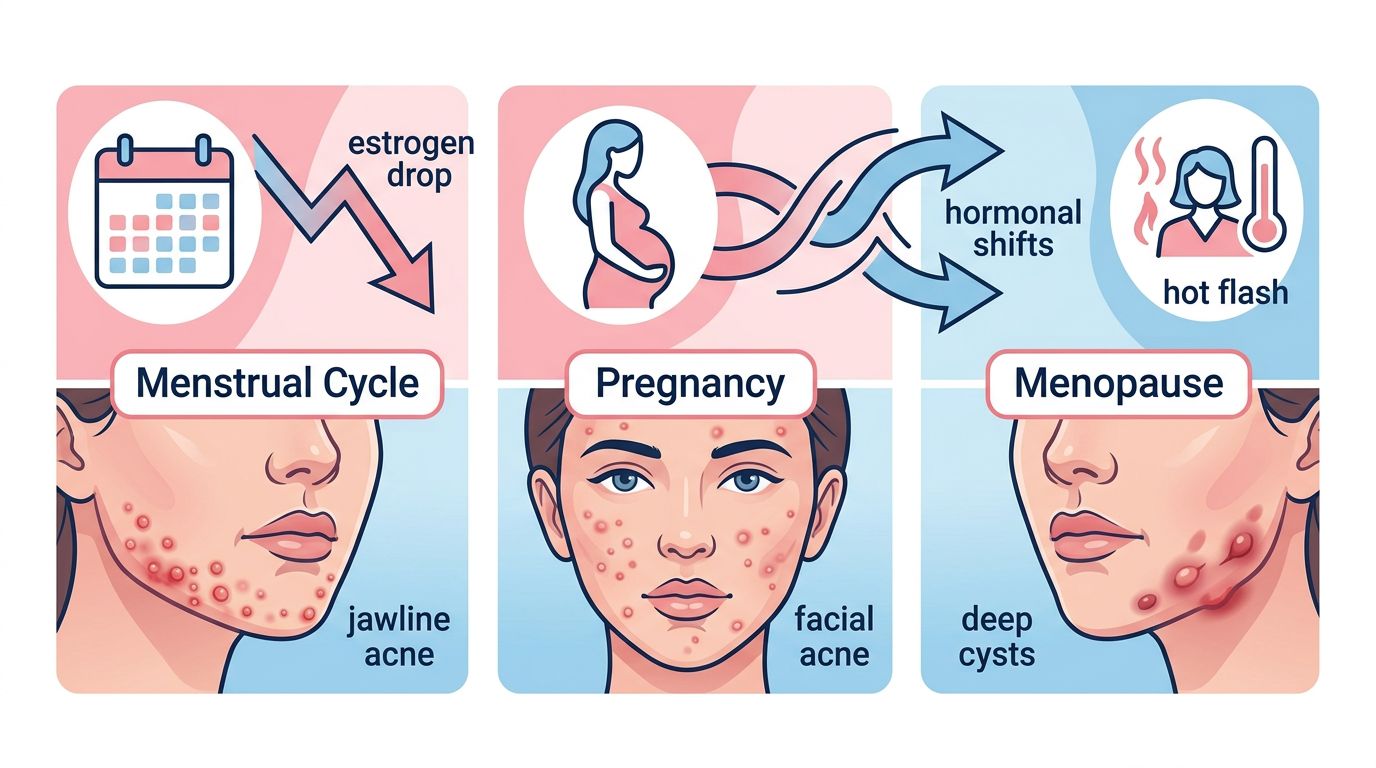
The table below summarizes typical triggers we encounter, helping us link symptoms to their potential causes.
| Trigger | Hormonal Change | Typical Acne Pattern | Treatment Approach |
|---|---|---|---|
| Menstrual Cycle | Østrogenniveauet falder, og progesteronniveauet stiger før menstruation. | Cystic acne on the jaw, chin, and lower cheek area | Spironolattone, contraccettivi, retinoidi |
| Pregnancy | There is an increase in progesterone and estrogen and then there is a sudden drop after childbirth. | Facial papules and pustules, as well as those on the chest and back | Avoided topicals that are safe for pregnancy, as well as spironolactone and birth control |
| Menopause | Reduced estrogen levels and a proportionate increase in androgens. | Deep cysts along chin and neck | Topical treatments; spironolactone; Hormonal replacement therapy |
Every trigger requires a unique shift in hormones, producing a specific pattern of acne. Identifying the hormonal triggers of acne allows us to customize our approach to the hormonal imbalances rather than simply prescribing a generic ad for skin care products. When the clinical acne presentation coincides with the hormonal timeline, we can address the acne with mechanism-specific treatments rather than breakouts. Each time we do this, we will need to consider the entire health context and treatment goals of the patient.
Common hormonal acne triggers and patterns visualized for patient education.
When you understand these patterns, it enables you to predict and control how your skin breaks out. At First Class OBGYN, we provide you with attentive expert care that takes a look at everything going on, because when you understand why your skin responds a specific way, you can work with us to determine the best treatment options for your current stage and needs. In this section, we will look at the different ways to treat hormonal acne, including lifestyle changes and prescriptions. Treatment results depend on individual patient needs and clinical situations.
Effective Treatments for Hormonal Acne
In order to find a suitable treatment for your hormonal acne, it is important to note how your body’s hormonal changes affect your skin. At First Class OBGYN, we know how frustrating and embarrassing the continuous and cystic breakouts can be, especially of the jawline and chin. These types of breakouts are located along the jawline and chin, and they are caused by internal hormonal imbalances, specifically, due to high levels of androgens. Because of this, managing the condition typically requires a medical approach due to the limitations of topical acne treatment. Restoring a woman’s confidence is our team’s goal through individualized, expert, and attentive care specific to your physiological needs.
Prescription therapy is the most dependable route to achieve clear skin, It is a personal choice to start medical management and requires evaluating the positive impacts of the oral medications against the possible negative side effects. The table below demonstrates a direct comparison of the two of the most frequently prescribed therapies for hormonal acne.
Spironolactone vs. Birth Control Pills for Hormonal Acne
| Treatment | How It Works | Typical Dosage | Common Side Effects | Efficacy Timeline |
|---|---|---|---|---|
| Spironolactone | Inhibits androgen receptor activity and decreases the production of sebum. | 50-200 mg daily, start low and titrate | *Dizziness* *Breast tenderness* *Increased urination* *Hyperkalemia* | 2-3 months for significant improvement |
| Birth Control Pills | Supprime la production d'androgènes par les ovaires et stabilise l'œstrogène et la progestérone. | One pill per day, either a cyclic or extended regimen | Nausea, bleeding between periods, mood alterations, potential blood clotting risks (rare). | 3-6 months for optimal results |
This comparison highlights the different mechanisms and factors to be considered for each option. Spironolactone works on the skin directly, whereas the pill works on the hormonal signals that cause the breakouts.
Spironolactone for Hormonal Acne
Spironolactone is a medication originally developed as a diuretic, but it has become a cornerstone of therapy for hormonal acne due to its anti-androgen properties. The drug works by blocking androgen receptors in the body. Androgens like testosterone stimulate the sebaceous glands to produce excess sebum, an oily substance that clogs pores and leads to inflammatory, cystic acne. By preventing androgens from binding to their receptors, spironolactone for acne directly reduces oil production, tackling the root physiological cause of these stubborn breakouts.
When prescribing spironolactone, we typically begin with a low dose and gradually increase it, a process known as titration. According to American Academy of Dermatology guidelines, the effective dosage falls within a range of 50 to 200 milligrams per day. Most patients find their optimal therapeutic effect in the middle of this range. It is essential to monitor potassium levels while on this medication, as spironolactone is a potassium-sparing diuretic. Common side effects can include dizziness, breast tenderness, and increased urination; taking the medication with food and staying well-hydrated often mitigates these issues. The first noticeable improvements, particularly a reduction in the severity of cystic lesions, are typically observed within two to three months of consistent use.
Birth Control Pills as an Acne Treatment
Birth control for acne treatment is an FDA-Approved method that is effective for women whose acne is tied to hormonal fluctuations during their menstrual cycle. Estrogen and progestin combined oral contraceptives (COCs) reduce the production of androgens by the ovaries, and therefore reduce the production of androgens. Because of this hormone stabilization, the medication is able to prevent the mid-cycle spike that often causes new lesions. Because of this, oral contraceptives can serve as a two for one solution for acne treatment and contraception or cycle regulation.
There are different formulations used for the treatment of acne that have received specific FDA approval, like Yasmin and Ortho Tri-Cyclen. The regimen includes the patient taking one active pill every day, and this can be done cyclically or extended, as per physician’s orders. This treatment, however, may not be for everyone and a detailed medical history is very important. First Class OBGYN pointed out the clinical experience, and we screen meticulously for risk factors. Those over 35 who smoke, or have a history of blood clots, migraines with an aura, or have some types of hypertension may have a higher risk of complications and may need to be treated differently. Optimal clearing of inflammatory acne can take from three to six months of continuous use of this medication.
Lifestyle and Skincare Adjustments
For the best results from medical therapies, supplements, and prescription-grade skincare, you should incorporate a few lifestyle changes. A good starting point would be a low-glycemic diet, meaning limit refined sugars and simple carbs. This step, along with stress management, sleep, exercise, and nutritional changes, creates a more unfavorable internal environment to support hormonal flare-ups. Your habits create the base to make prescription treatments more effective, and increase their potential to create long-term results.
A gentle, consistent skincare routine complements your systemic therapy without causing irritation. We recommend a non-comedogenic cleanser used twice daily, which is gentle enough to preserve the skin barrier. Incorporating topical ingredients is also critical: benzoyl peroxide helps kill acne-causing bacteria, salicylic acid works to unclog pores, and topical retinoids accelerate skin cell turnover to prevent new blockages. However, these products can cause dryness, so their introduction should be slow and concurrent with adequate moisturization. The synergy of medical therapy and this supportive care is why At First Class OBGYN, we are here for you to develop a plan that seamlessly integrates both approaches.
Effective hormonal acne management entails time, dedication, and the proper help. There is a possibility for every person to experience different results due to varying personal and medical factors. It is critical to obtain an in-depth assessment to pinpoint the best treatment approach. This is meant to educate and is not a substitute for a full medical evaluation.
Results may vary based on individual patient conditions and circumstances.
When to See a Specialist for Hormonal Acne
Given that hormonal acne stems from underlying imbalances in androgens and other hormones, it is important to recognize when these changes call for a specialist’s perspective. While mild flare-ups can often be managed with lifestyle adjustments, persistent breakouts along the jawline and chin that resist over-the-counter remedies often indicate a need for hormonal acne treatment. The decision to move beyond home care is not always obvious, but certain clinical cues point toward a gynecologic evaluation.
The hallmark presentation of hormonal acne in adult women is deep, cystic breakouts concentrated along the lower face, especially the jawline and chin. These lesions tend to be painful, leave dark spots, and do not respond to conventional topical acne products. Accompanying signs—irregular menstrual cycles, excess facial or body hair (hirsutism), thinning scalp hair, or unexplained weight changes—strongly suggest an endocrine imbalance such as polycystic ovary syndrome (PCOS) and make a gynecologic workup essential. If over-the-counter or prescription topical treatments have not produced meaningful improvement after three to six months, it is a sign that self-directed hormonal acne treatment is insufficient and a specialist evaluation becomes the next appropriate step.
Your gynecologist can do blood tests and ultrasounds to see if your acne is related to PCOS or a thyroid issue and high prolactin levels, which need different hormonal treatments. A specialist’s evaluation is also important if severe cystic acne develops during pregnancy or breastfeeding since many acne treatments are contraindicated for use in pregnancy and breastfeeding. At First Class OBGYN, we believe in restoring women's lost self-esteem by finding the cause of their acne and formulating a treatment plan. We offer US and EU board certified, warm and caring, multilingual services in South Florida in Miramar, Weston and Pembroke Pines. Early intervention by a specialist may not guarantee a successful treatment but can help avoid acne’s emotional impact, daily life disruptions, and long-lasting scars.
Frequently Asked Questions About Hormonal Acne
This is a continuation of our overview of acne. We understand your questions may be focused on treating hormonal acne and how you can achieve clear skin. Here, the First Class OBGYN team, answers frequently asked questions regarding the type of acne that tends to need a more specialized treatment approach.
What is hormonal acne?
Hormonal acne is acne that is primarily triggered by fluctuations in hormones, particularly androgens like testosterone. This leads to increased oil production and can cause deep, painful cysts around the jawline, chin, and lower face. In our South Florida practice, we see that this type of acne is distinct from other breakouts because it often flares predictably with menstrual cycles.
Is spironolactone for acne effective?
Spironolactone is an effective hormonal acne treatment for many women. It works as an anti-androgen medication by blocking the hormone receptors that signal your skin to produce excess oil. This helps reduce clogged pores and inflammation, making it an excellent prescription option for acne caused by hormones.
Can birth control for acne help me?
Certain combined oral contraceptives can be prescribed to treat acne. They are approved by the FDA to treat acne by regulating hormones and increasing a protein called sex hormone-binding globulin (SHBG) which decreases free testosterone in the blood. As a result, it helps to reduce breakouts and our board-certified doctors regulate to help with breakouts, and they use this strategy for patients who want a dual benefit.
How long does it take for hormonal acne treatment to work?
It’s important to be consistent with any prescription treatment for acne. Initial improvements may be observed after 6 to 8 weeks, however, it usually takes 3 to 4 months to notice more substantial changes. We inform patients that the full results for treatment of hormonal breakouts can take some time to complete as your skin’s renewal cycle will have to adjust.
When should I see a gynecologist for hormonal acne?
We suggest scheduling a consultation when at-home treatments haven't worked or you see your breakouts occurring with your period. With both US and EU certifications, our board-certified specialists can create customized plans that focus on the underlying hormonal issues, not just the topical issues. Our multilingual staff is available at all our locations in Miramar, Weston, and Pembroke Pines.
Please book a consultation at First Class OBGYN for personalized expert care. As results will differ due to patient particular conditions and situations, a professional assessment is the most efficient starting point.
Taking Control of Your Hormonal Health
Hormonal acne is driven by androgen fluctuations that boost sebum production and trigger inflammation. Hormonal acne treatment starts with understanding these triggers and exploring evidence-based solutions. Prescription options like spironolactone for acne or birth control for acne can help, but the most effective path is a plan built around your unique profile.
It all starts with a professional consultation. Here at First Class OBGYN, we combine board-certified experience with a promise to provide you with the safest and most effective care, allowing you to move forward with confidence. We are here to support you - book your appointment today and let us help you restore your balance and feel like yourself again.